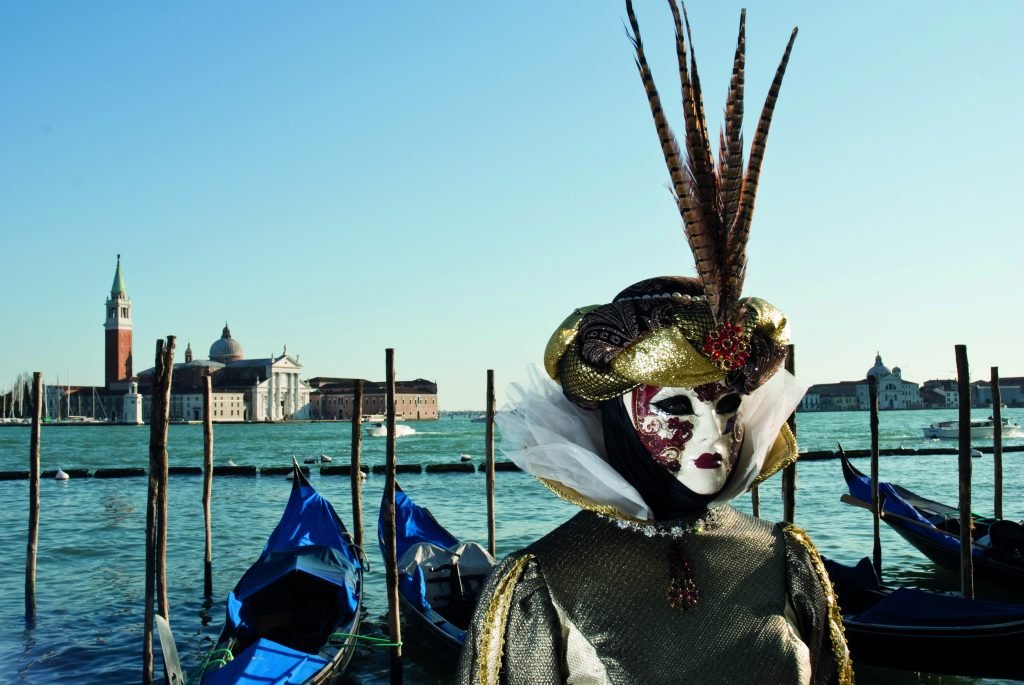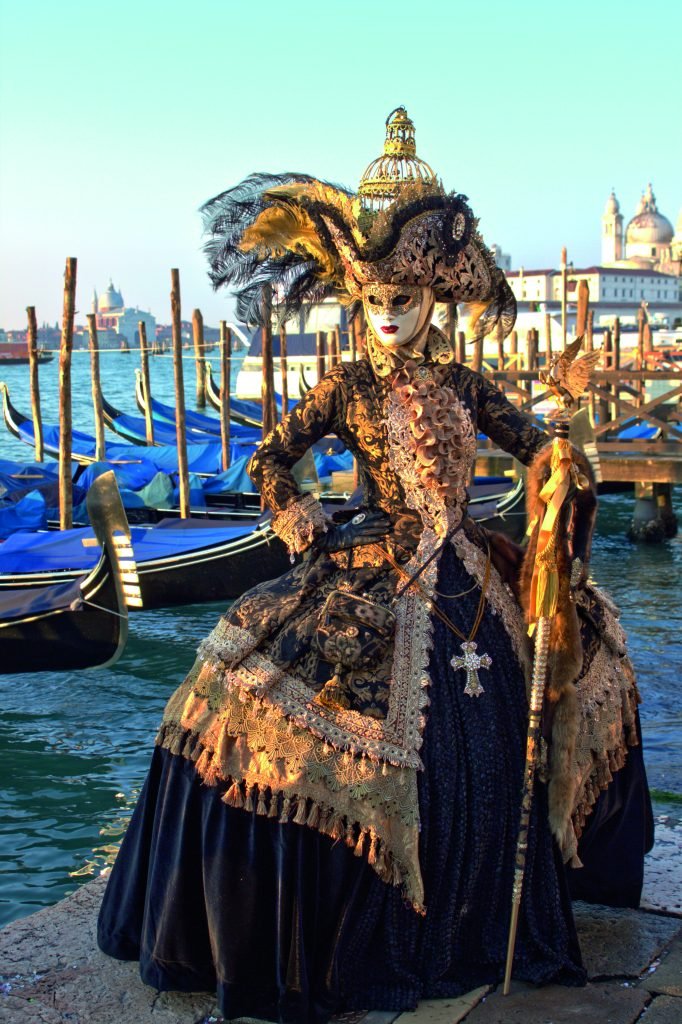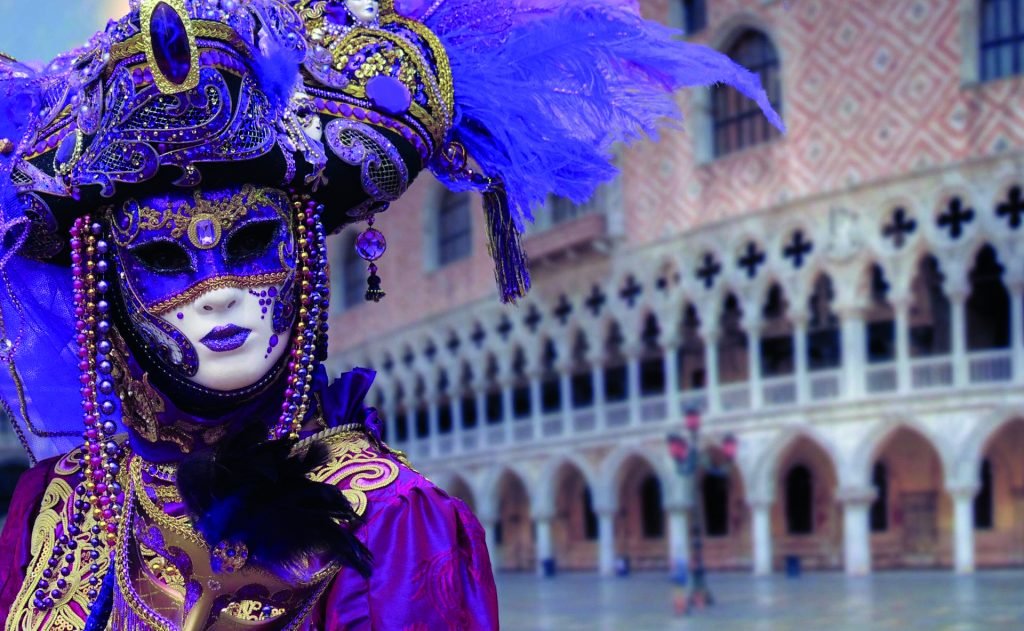

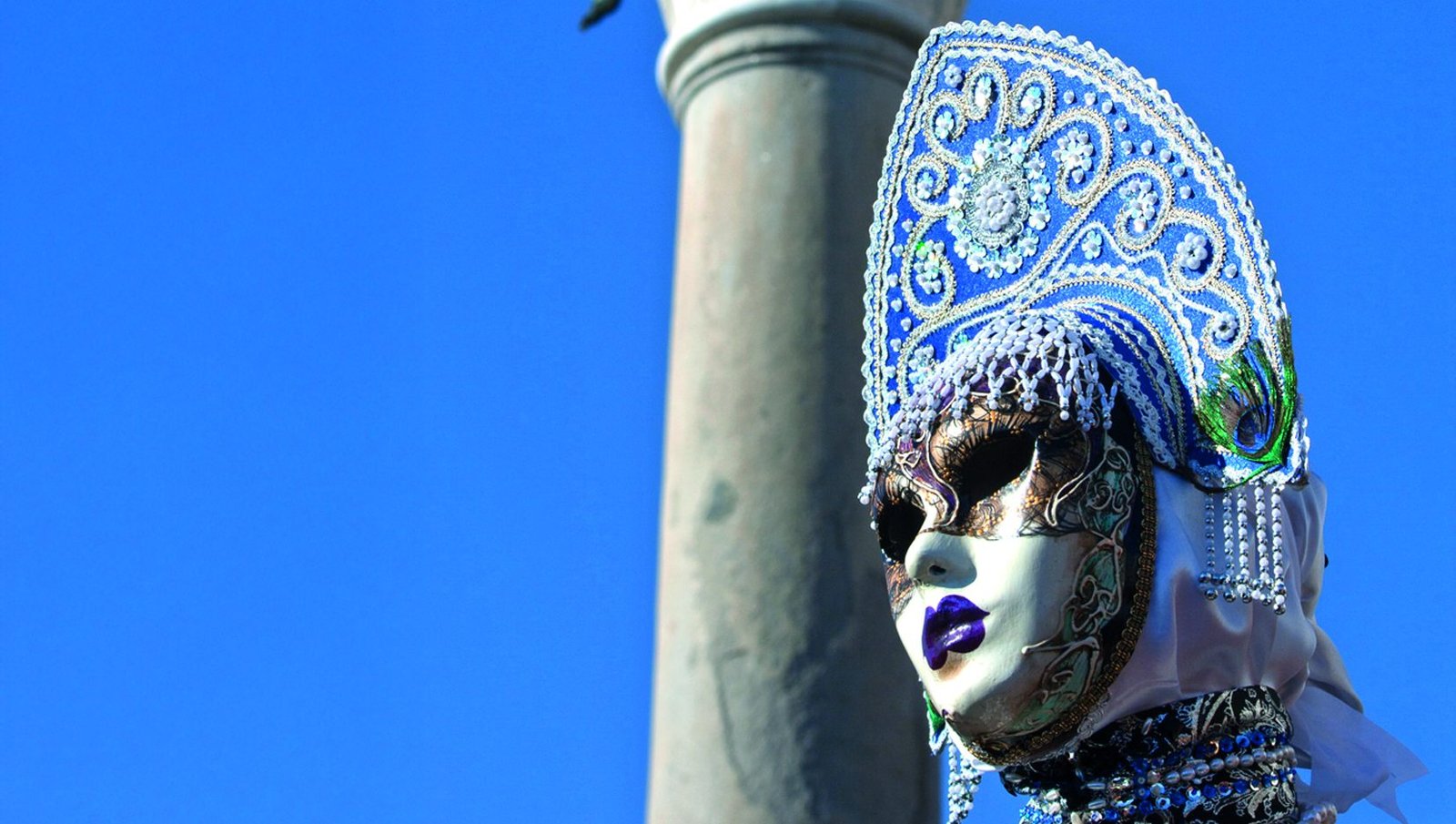
THERE'S A TIME OF THE YEAR WHEN THE CITY SLOWS DOWN, DISGUISES ITSELF IN SILENCE AND EXPECTATION, AND ALLOWS ELEGANCE TO RETURN TO GESTURE, GAZE, PRESENCE. SHADOWS LENGTHEN ON THE WATER, STEPS BECOME SLOWER, FACES HIDE THEMSELVES TO SAY MORE. IT'S AN ANCIENT RITUAL THAT REQUIRES NO NOISE OR SPECTACULARITY, BUT RESPECT: A SUSPENDED TIME WHERE BEAUTY IS NOT DISPLAYED, IT IS INTELLECTUALLY INTELLECTUAL.
The Venice Carnival It's about to begin again. It arrives as all things that truly matter do: unannounced, unannounced. It creeps through the cold morning streets, glides across the still waters of the canals, settles on the worn stones. The city doesn't change its face: it changes its breath. Venice doesn't need to transform, because that's already all Carnival requires.
Winter is still present. You feel it in your fingers, in your slower steps, in your visible breath. But beneath that cold, there's a subtle wait. The masks still rest closed, the costumes are carefully folded, the wigs hang like bodies suspended. Nothing is rushed. The Venetian Carnival doesn't like improvisation: it prefers silent preparation, measured gestures, the beauty that only comes to those who wait. Venice, these days, seems to listen to itself. The sounds become more distinct: footsteps on cobblestones, the splash of water against a foundation, the creaking wood beneath an ancient door.
Every sound becomes part of a larger scene. It's a theater without curtains, where no one is truly a spectator and no one is truly a protagonist. During Carnival, Venice doesn't lie. It uses the mask to express what the face alone cannot. Here, anonymity isn't escape, but opportunity. Without a name, without age, without a role, one walks straighter. One looks longer. One feels more. Masks erase the superfluous and leave room for the essential: a gesture, a look, a presence. There is no real ostentation in the Venice Carnival. Even when the costumes are sumptuous, they remain restrained. Even when the gold shines, it does so with restraint. It is a disciplined beauty, never shouted. A beauty that knows the value of limits. Those who wear it know it: it's not about showing off, but about supporting the weight of what one wears. The mask imposes slowness, posture, silence. It forces one to stay in the right tempo.
The days flow like water in the canals: seamlessly. The crowd doesn't overwhelm, it spreads out. Encounters are brief, often silent. We pass under an arch, on a bridge, in a field open to the wind. No one asks who you are. No one wants to know where you come from. All that matters is how you walk, how you stop, how you occupy space. The Venice Carnival comes alive especially in the evening. When the lights are low, when the humidity rises from the stones, when the shadows lengthen the bodies. It is there that the city becomes most real. The buildings close their windows, the masks seem to belong to the walls, the doorways, the worn stairs. Everything appears and disappears with the same naturalness. Every year the ritual repeats itself, but it is never the same. The faces behind the masks change, the gazes change, the steps change. The rhythm remains. The sensation of being inside something that cannot be held back remains. Venice offers its Carnival as it has always offered itself: without explanations, without instructions. Those who arrive in a hurry see nothing. Those who seek the spectacle remain on the surface. But those who slow down, those who accept getting lost, those who let the city lead the way, then understand. They understand that Carnival is not an event, but a condition. A suspended time in which identities loosen and the world, for a moment, stops demanding definitions. When it all ends, no noisy nostalgia remains.
Something more subtle remains. A physical memory. The memory of a slow step, of a glance met and immediately lost, of a beauty that didn't ask to be held back. Like Venice. Like its Carnival.