
WHEN TENNIS WAS ART, ELEGANCE, AND DESTINY: THE SUSPENDED TIME OF GREAT CHAMPIONS.
There was a time when tennis wasn't just a sport, but an aesthetic ritual, a perfect choreography of gesture and character, light and shadow. A time when champions didn't just win: they embodied an idea, a style, a world. In that unique theater of the 1970s and 1980s, between grass courts and clay, between Monte Carlo and New York, between Wimbledon and Paris, a figure emerged like an enigma: Björn Borg.
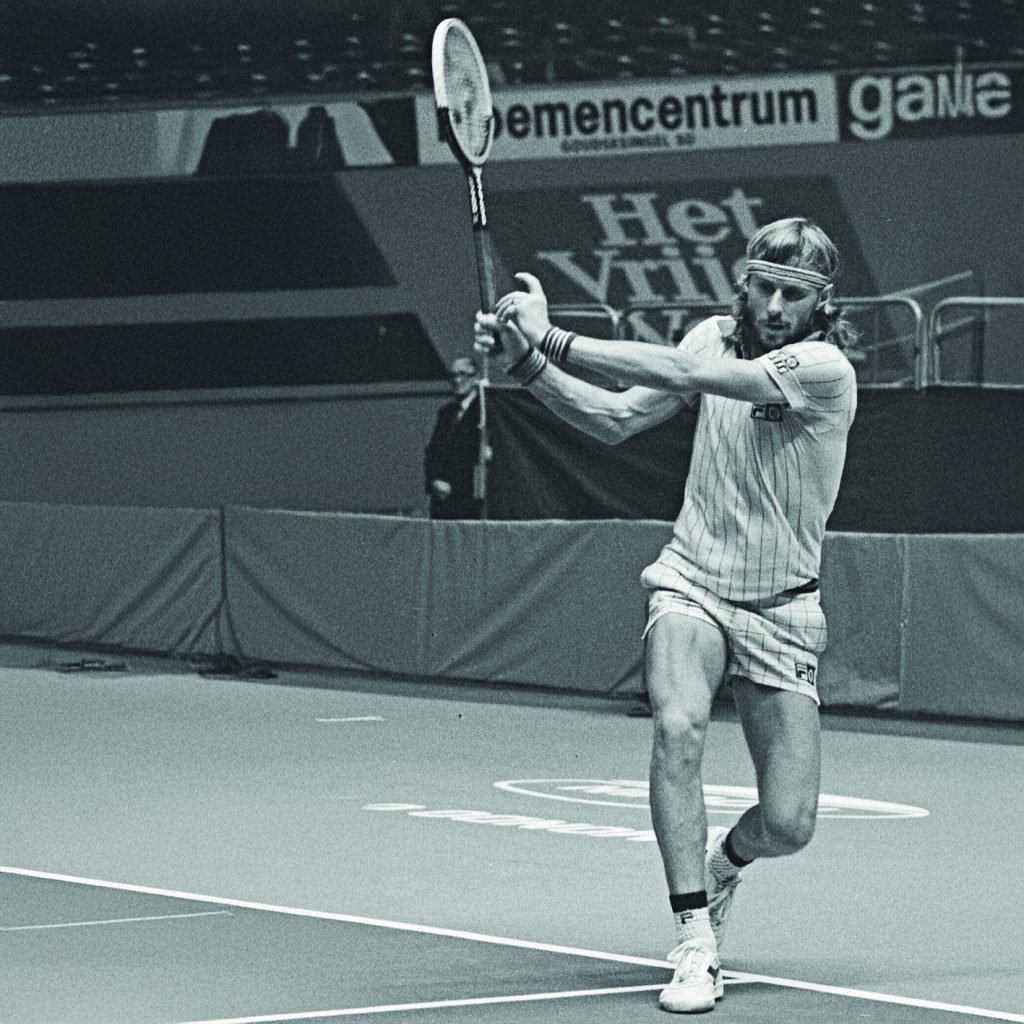
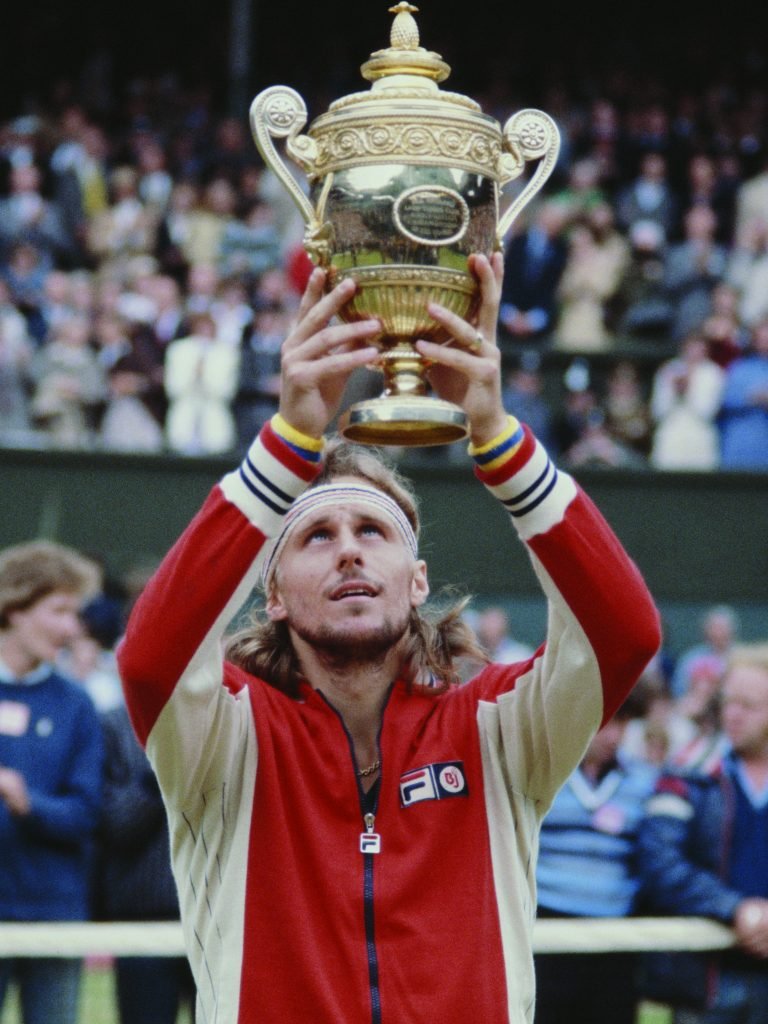
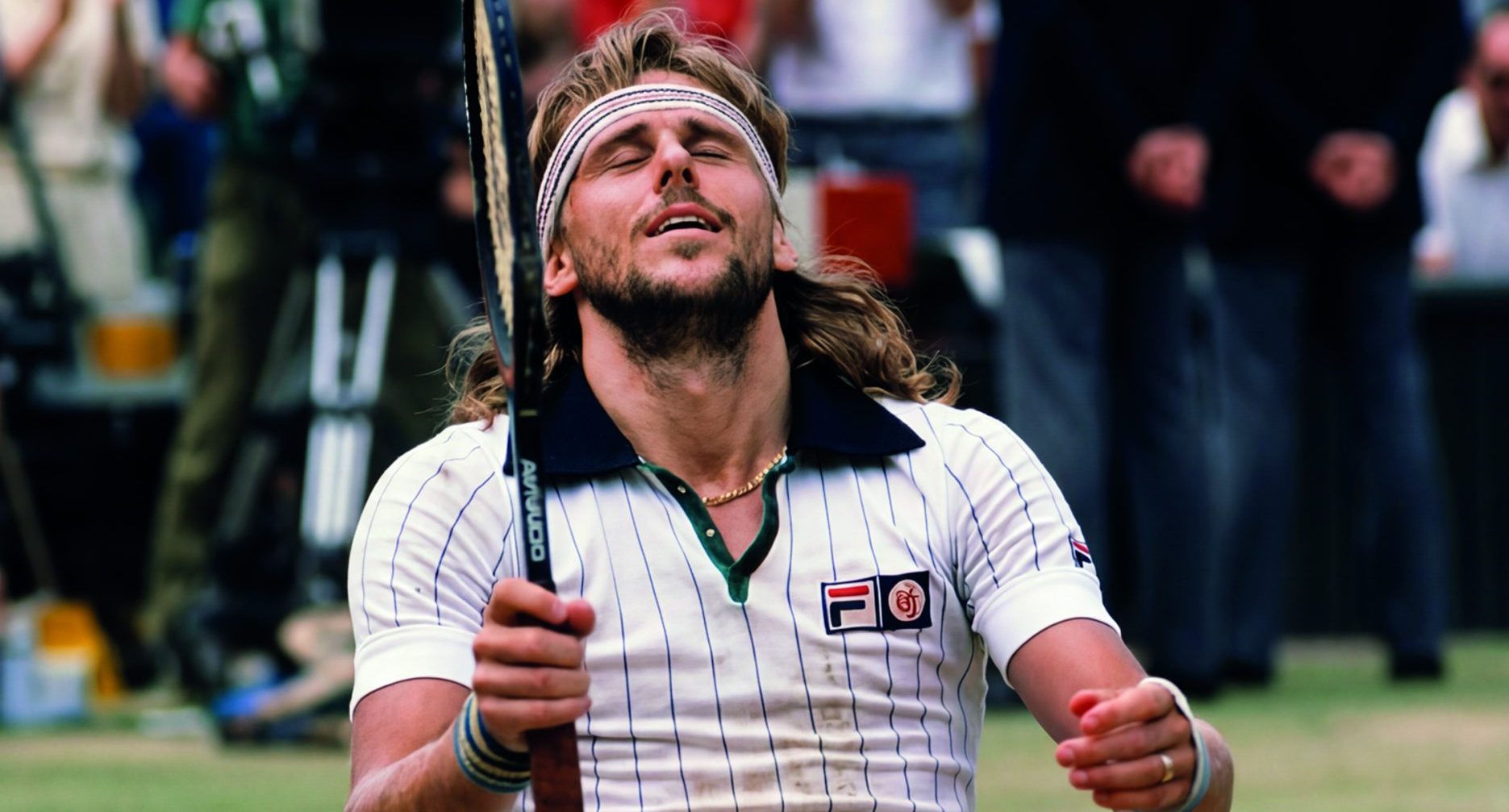
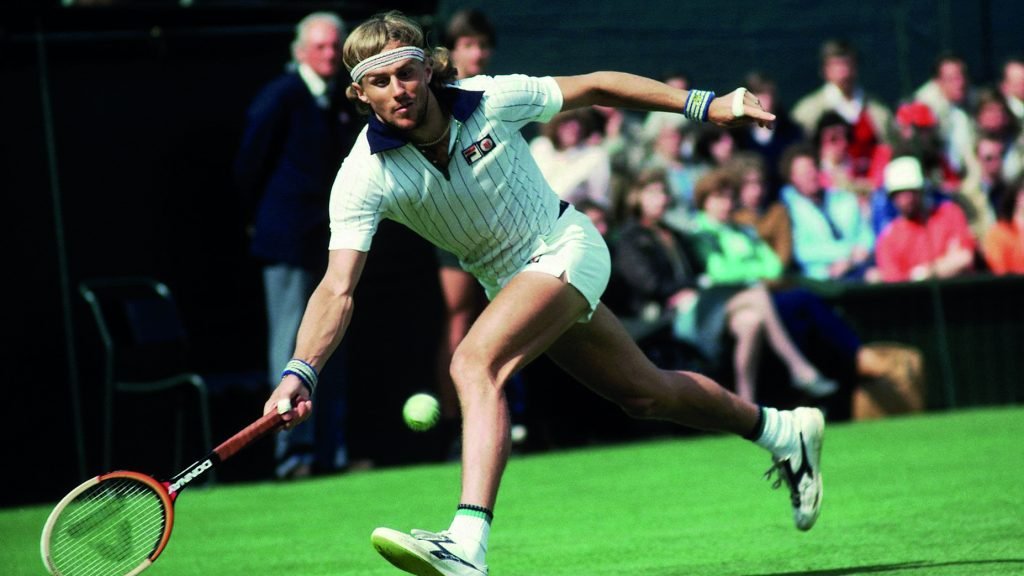
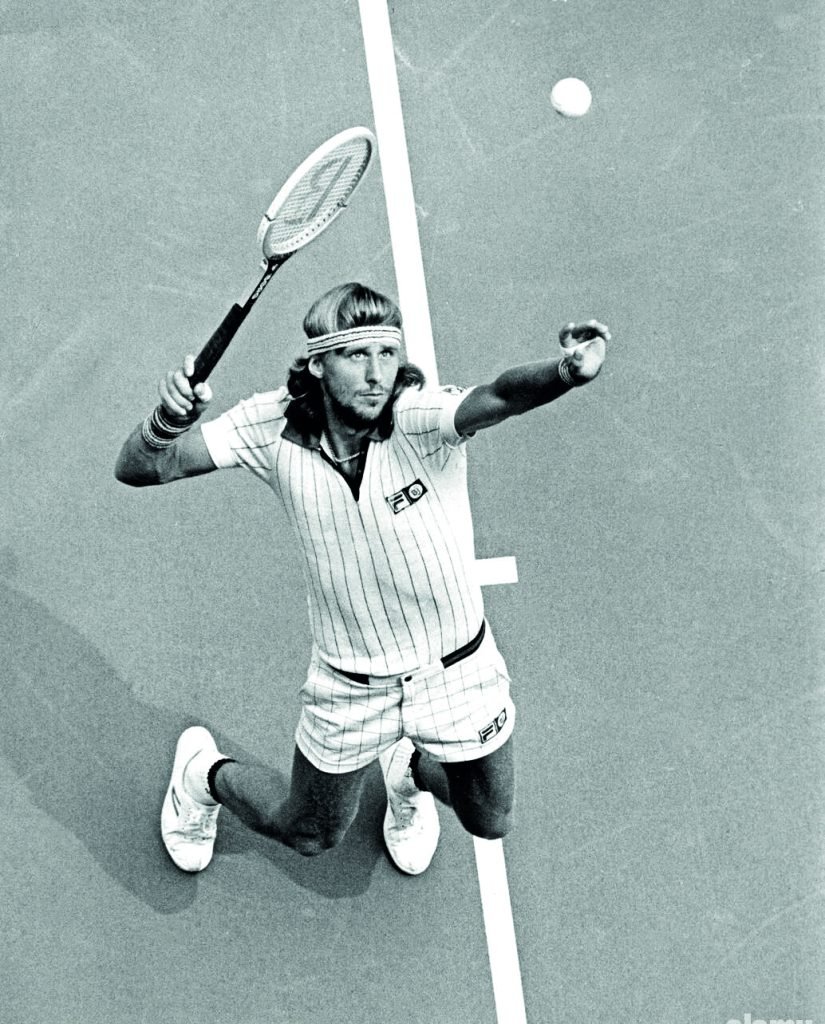
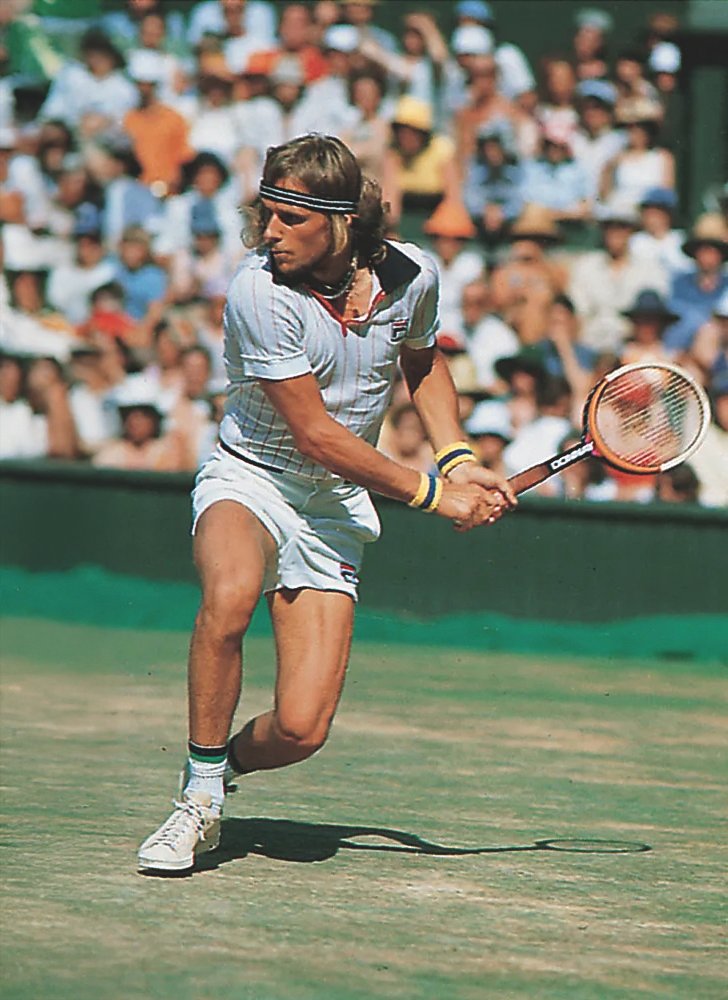
Borg wasn't just a tennis player. He was a silence that dominated the noise. An imperturbable face while the world around him vibrated, shouted, and shook. Long hair, a headband, a distant gaze: he seemed sculpted from the ice of the North, yet capable of unleashing an inner fire that made him invincible. His tennis was essential, almost ascetic, yet profoundly emotional. Every shot carried with it an invisible tension, an absolute discipline, an almost monastic rigor. There was nothing superfluous in his game: everything was reduced to the essence, as if every gesture had been filtered.,
distilled, brought to a final form.
And it was precisely in that subtraction that his strength lay. Borg played as if time did not exist, as if each point were isolated from the rest, self-sufficient, complete. There was no rush in his movements, but an inexorable precision. His body seemed to already know the trajectory, the response, the outcome. He was a perfectly controlled emotional machine, and precisely for this reason capable of generating an almost unbearable tension in those who watched him.
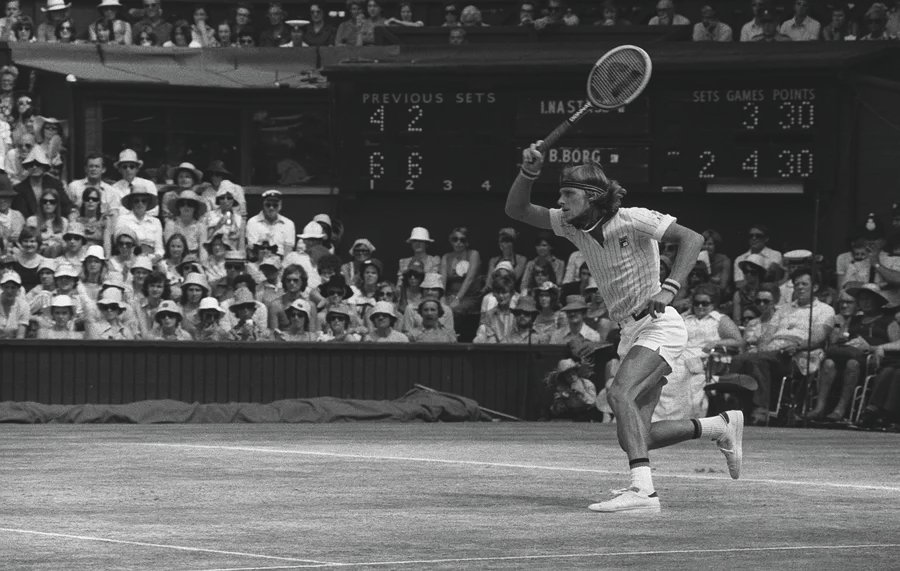
In those years, the circuit was a choral novel, a mosaic of unique personalities. Alongside him, equally magnetic protagonists: the rebellious genius of John McEnroe, capable of transforming every match into a theatrical drama made of sudden explosions and cutting silences; the Italian elegance of Adriano Panatta, last poetic interpreter of the red earth; the indomitable power of Jimmy Connors, symbol of an aggressive America hungry for victory; the unpredictable creativity of Ilie Nastase
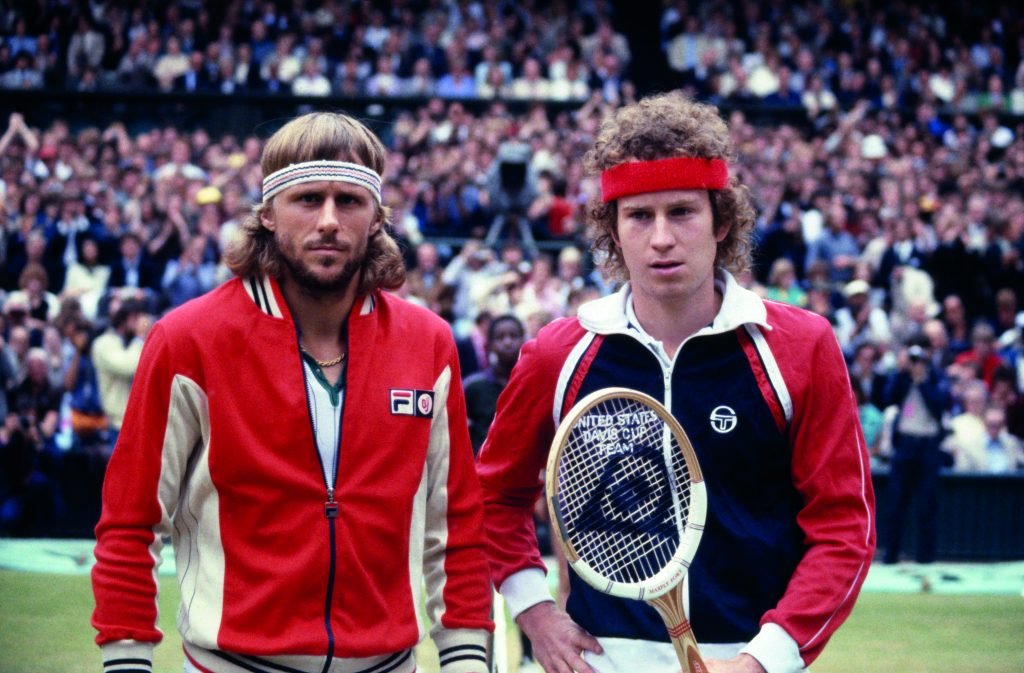
and the almost epic resilience of Guillermo Vilas, a tireless interpreter of slow surfaces. Each brought a different vision of the world to the field, a different emotional grammar. But Borg was something else. He was the perfect balance between opposites. His rivalry with McEnroe It wasn't just a sporting event: it was a confrontation between two irreconcilable natures. Ice versus fire. Control versus instinct. Silence versus noise. And perhaps never before had tennis reached an almost metaphysical dimension like in the 1980 Wimbledon final. It was no longer a match, but a suspended epic, where every point seemed to stretch beyond real time. The fourth-set tie-break, even today, remains one of the most intense moments in the history of the sport: not because of the technique, but because of the emotional tension, that feeling that something unrepeatable was happening before the eyes of the world.
That tennis also lived off the court, in a dimension that today seems almost unrepeatable. It was high society, it was style, it was travel. Tournaments were stops on a contemporary Grand Tour, where athletes and celebrities met among yachts, iconic hotels, and exclusive soirées. The racket became a passport to a universe of international allure, relationships, and glances. Borg, with his Nordic reserve, embodied a natural elegance, never ostentatious, never contrived. He didn't seek attention, but inevitably attracted it. He was an icon without claiming to be one. A symbol born precisely from his distance, from his refusal to participate in the noise of the world. In an era already crowded with strong and visible personalities, Borg chose the opposite: to step back, to stay behind, to let the game do the talking. And then, as only legends do, his career was brief, almost mysterious. At just 26, when the world still considered him unbeatable, when his dominance seemed destined to last, he decided to stop. No decline, no slow exit. Just a sharp, definitive, almost incomprehensible interruption.
That choice helped to fix him in time. Borg never became a former champion. He remained a suspended image, a frozen moment. He didn't grant the public the privilege of watching him age as a sporting figure. He left his form intact, his legend, his unfinished perfection. Today, looking back, that tennis seems distant not only in time, but in spirit. It was an era when every match told a story, every tournament was a chapter, every rivalry
A clash of worldviews. The audience didn't just watch: they participated, recognized themselves, took a stand. And at the center of that story, motionless and magnetic, remains Björn Borg. Not just a champion, but an idea. A form of perfection that needs no explanation. A silence that continues to resonate, even today, with the same intensity as then. Today, Björn Borg remains a vibrant presence on the great world tennis circuits: captain of the Laver Cup, A key figure in major international tournaments, a presence that spans time without truly belonging to any era. His name is more than just a memory: it remains a measure, a style, a legend.