



Famous for his evocative and richly saturated images
that capture the human spirit in its most defenseless moments, the work of McCurry He transcends the boundaries of time, culture, and language. His lens offers not only a glimpse into the lives of others, but an invitation to hear their stories. What sets McCurry apart is his ability to capture the incredible in the ordinary. His photographs invite the viewer to connect with cultures and traditions that might otherwise seem distant, evoking a profound sense of wonder and respect for the world's diversity. His distinctive use of colors McCurry's work is his signature. Each photograph feels like a masterclass in composition, light, and emotion, transporting viewers into the heart of the moment. His work adorns the walls of galleries and museums around the world, and his books, including The Iconic Photographs e Untold: The Stories Behind the Photographs, are treasures sought after by lovers of art and culture.
For McCurry, photography isn't just about aesthetics—it's about the connection.
“The most important thing is to have a good story to tell.”
This ethic guides his work, documenting the resilience communities in the midst of conflict or celebrating the quiet beauty of everyday life.
Interview with Steve McCurry
OV: Have your international travels developed your photography? In what way?
SM: I've always had a desire to explore, and photography is the best way to do so. To understand someone else's life, you have to enter their world, learn about their culture, and build a bond of trust.
OV: Which of your photos is the most precious to you personally? Why?
SM: One of my favorite photos is of a mother and her child looking out the window of my taxi. It reminds me of the difference between their harsh world and my relative comfort.
OV: Do you do any charity work with your photography?
SM: I founded ImagineAsia, a nonprofit initiative. We've donated medical and English literature textbooks to schools and hospitals in Afghanistan and Pakistan, and supported schools for refugee children in Kabul. We also created the Young Photographers Initiative to teach Afghan children how to document their communities.
OV: What is your favorite photography destination in the world?
SM: I'm drawn to Buddhist countries like Burma, Tibet, and Japan for their serenity and strong connection to Buddhism, which promotes compassion and mindfulness. There, photography becomes an act of stillness, capturing the peace that permeates the places and people.
OV: What was your first camera?
SM: My first camera was a Kodak Instamatic 100, a gift from my father. It was simple, but it made me passionate about photography.
OV: Your portrait "Afghan Girl" is one of the most iconic images of all time. Can you tell us the story behind that moment?
SM: In 1984, in an Afghan refugee camp, I met a girl, Sharbat Gula, with an incredible gaze. After taking a few photos, everything aligned to capture a powerful image that went around the world.
OV: What do you hope people take away from your photographs, both now and in the future?
SM: I hope people feel a human connection. I want them to see the people I photograph as real human beings, with stories and emotions similar to their own.
OV: What is a great image in your opinion and what should it convey to the viewer?
SM: A great image tells a story and captures a moment that lingers. It's not about technical perfection, but about the emotion and message it conveys.
OV: Social media and smartphones have made photography more accessible than ever. How do you create an image that stands out from the noise?
SM: An image that stands out from the noise must convey emotion, tell a story, and offer a unique perspective. Its power lies in making the audience reflect and feel something, far beyond the surface.
OV: How has photography influenced your worldview and your understanding of humanity?
SM: Photography has shown me how connected we all are. It has taught me to see the world with empathy, discovering that, despite our differences, we share universal emotions. Photography has the power to bridge distances between people, reminding us that, ultimately, we are all human.
Four images that influenced his career
The Dust Storm
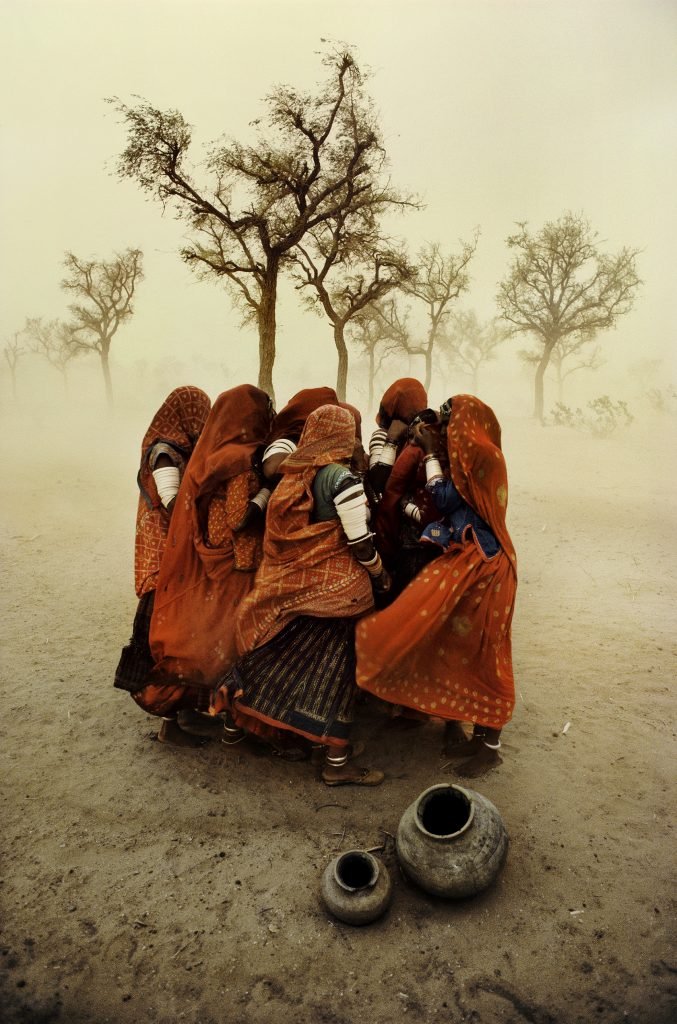
I was driving along a road in Rajasthan, with the sun at 40 degrees Celsius, when the dust storm began. I saw some women huddled on the side of the road, sheltered from the wind, chanting a prayer for rain. After a few moments, the storm passed, as if nothing had happened.
Boy in Mid-Flight
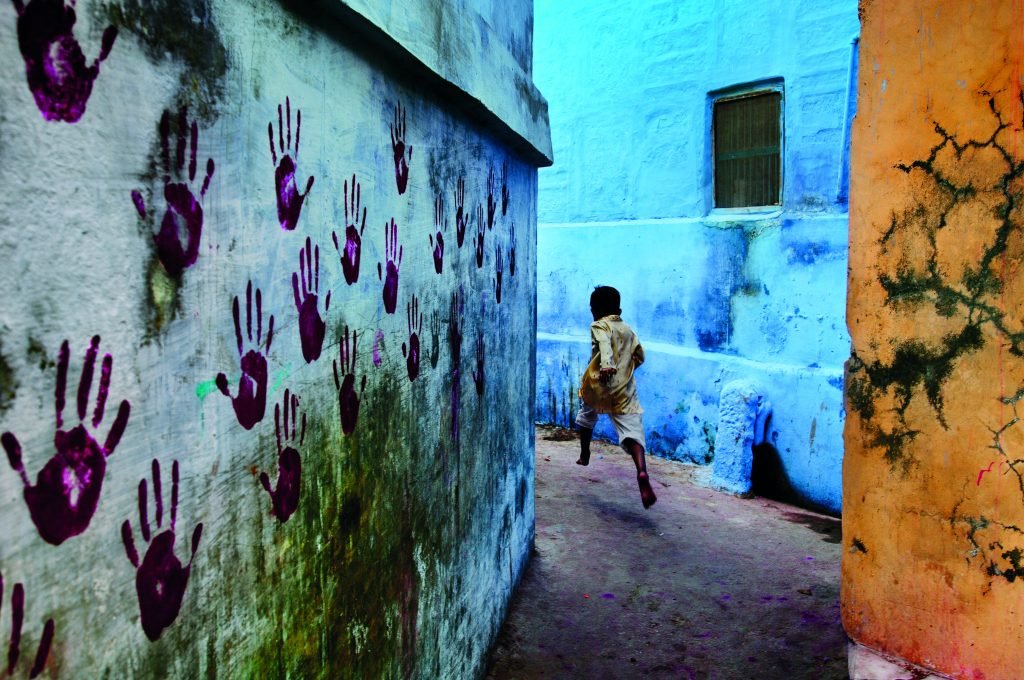
In Jodhpur, Rajasthan, I waited two hours to capture the perfect moment: a child jumping in the air in front of a blue-painted wall.
Taj and Train
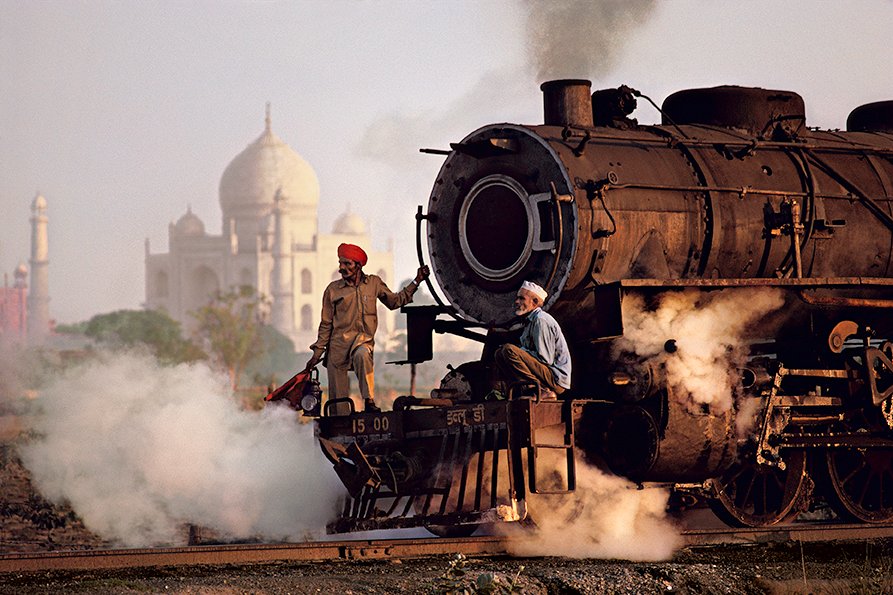
I took a picture of the Taj Mahal interrupted by the passing of a train: a contrast between timeless beauty and the frenzy of modern life.
Procession of Nuns
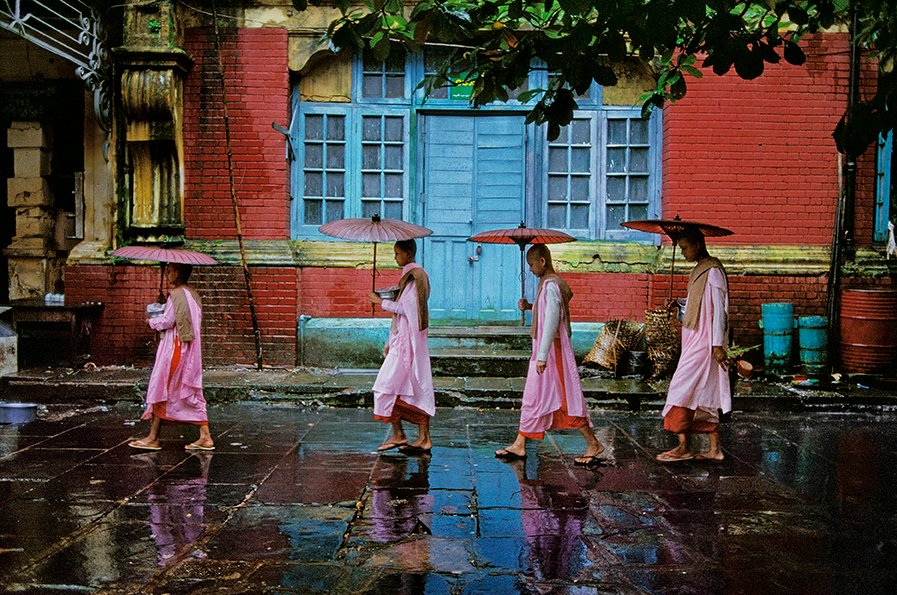
In Rangoon, I saw a group of nuns walking silently in the rain with colorful umbrellas: a serene and powerful image.
Steve McCurry continues to inspire with his timeless images, capturing the essence of humanity with empathy and mastery.