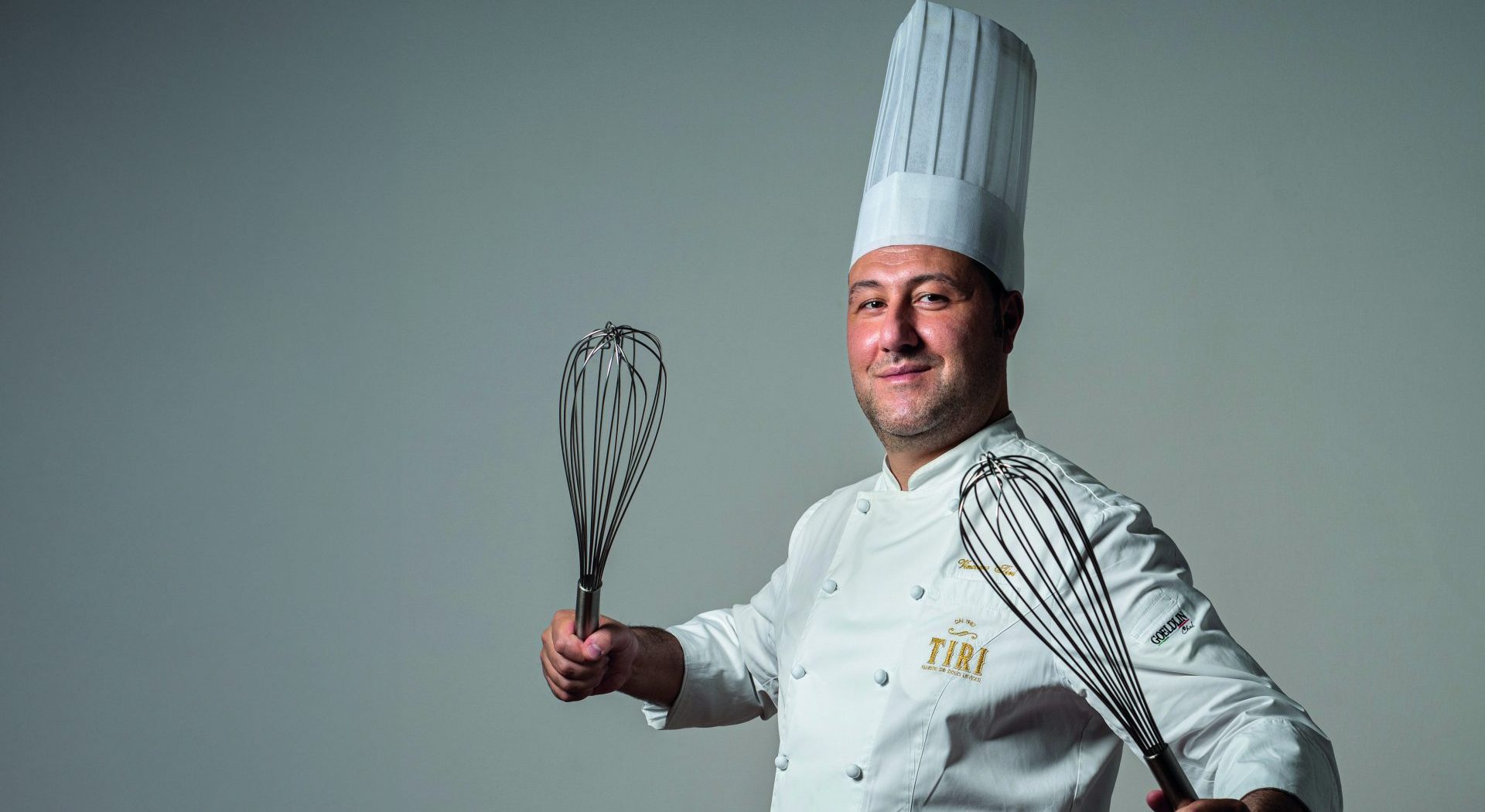
A RIGOROUS AND UNCOMPROMISING VISION THAT TRANSFORMS A TRADITIONAL YEASTED PRODUCT INTO A STRUCTURAL LANGUAGE, WHERE TECHNIQUE, FERMENTATION AND RAW MATERIALS MEET TO REDEFINE BALANCE, LIGHTNESS AND THE VERY MEANING OF CONTEMPORARY PASTRY MAKING.
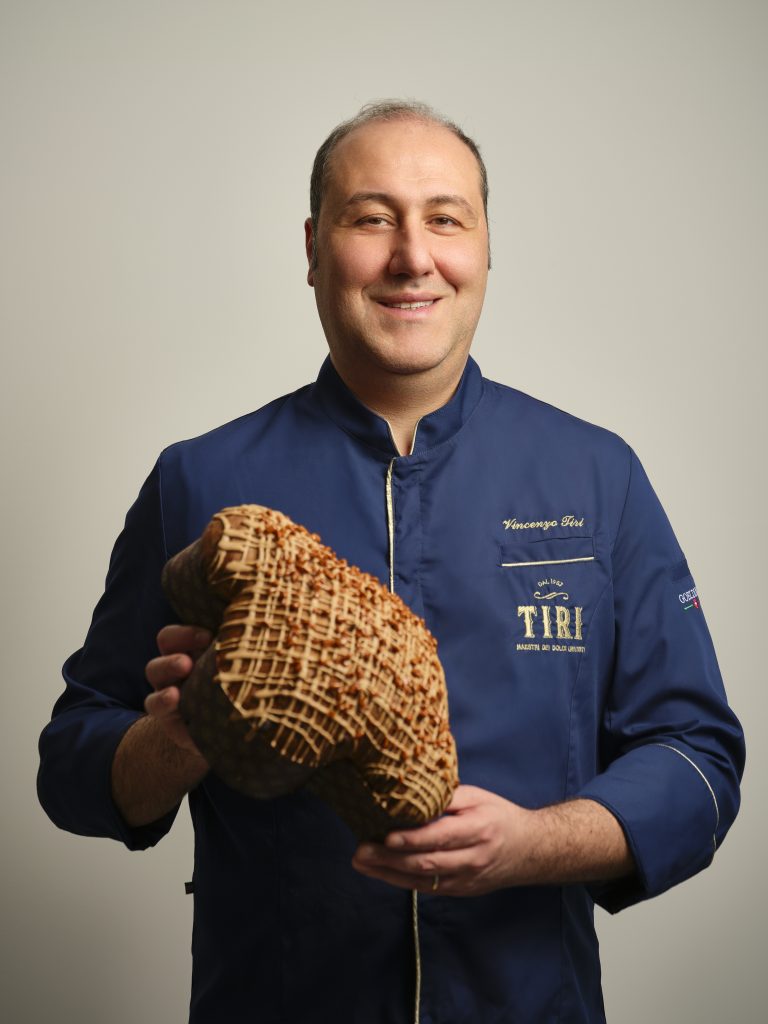
There's a point, in Southern Italy, where pastry making ceases to be a craft and returns to being a discipline. It doesn't happen by chance, nor by trend. It happens when someone decides to question what for decades has been considered untouchable. Vincenzo Tiri It starts from there, from a precise gesture: not accepting that the great leavened product has already said everything.
The tradition of two doughs is a solid, codified, and respected grammar. It works. It has built generations of masters and impeccable products. But Tiri senses a limit, something that remains unexplored in the aromatic depth and structure.
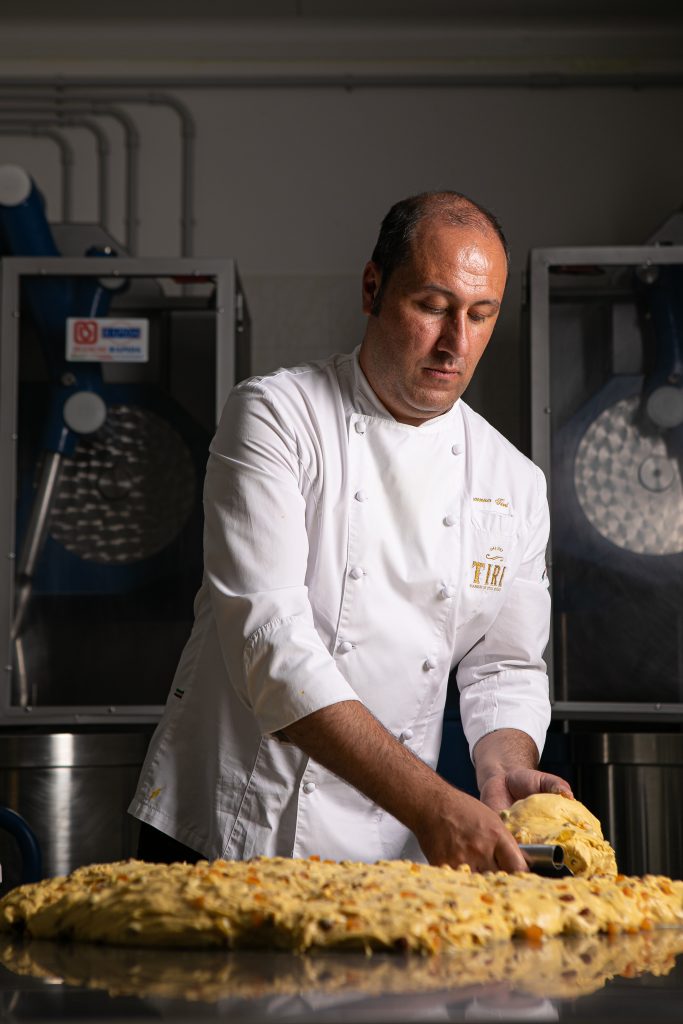
He introduces a third dough, a step that isn't an addition, but a risk-taking. Each additional step multiplies the complexity, but exposes the dough to greater instability. It's a fragile, technical, almost obsessive balance. The margin for error becomes invisible. The result isn't spectacular in the most obvious sense. It doesn't seek volume or effect. It's a different kind of lightness, recognizable in the gesture: the panettone doesn't break, it opens. It frays. It holds together a significant richness—butter, eggs, sugar—without ever becoming heavy. This is where the technique stops being a show and becomes a language. At the center is not the finished product, but the sourdough starter. It's a living organism, managed every day without exception, regulated in terms of timing and conditions with a precision that excludes shortcuts. No external support, no brewer's yeast. Just natural, slow fermentation, lasting over seventy-two hours. It's not a romantic choice, it's a method. In this approach, there's a form of resistance. In a context tending toward automation and standardization, Tiri works by subtraction, slowing down, and concentrating. He doesn't seek to simplify the process, but to push it to the limits of its possible expression. It's a constant pursuit of perfection that allows no compromise.
This same logic is reflected in the way panettone is reimagined. Not as a seasonal product, but as a supporting structure, an element capable of transcending other languages without losing its identity. Tiramisu changes texture when the biscuit gives way to the leavened product: the absorption is different, deeper, more uniform. Gelato works on contrast, transporting complex aromas at a temperature that would normally flatten them. Even in the simplest forms, like a spread, that matrix of fermentation, vanilla, and citrus remains intact.
It's not a decorative reinterpretation, but a precise operation: shifting the center of gravity without altering the balance. Each variation stems from a rigorous, almost surgical, technical expertise that allows for deconstruction and recomposition without losing coherence.
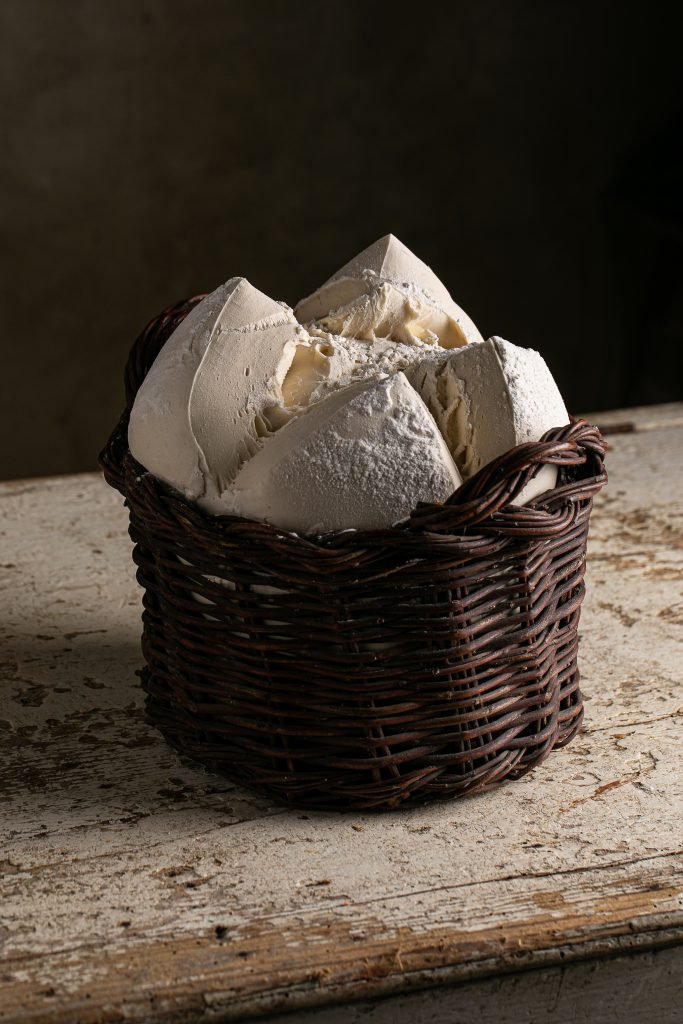

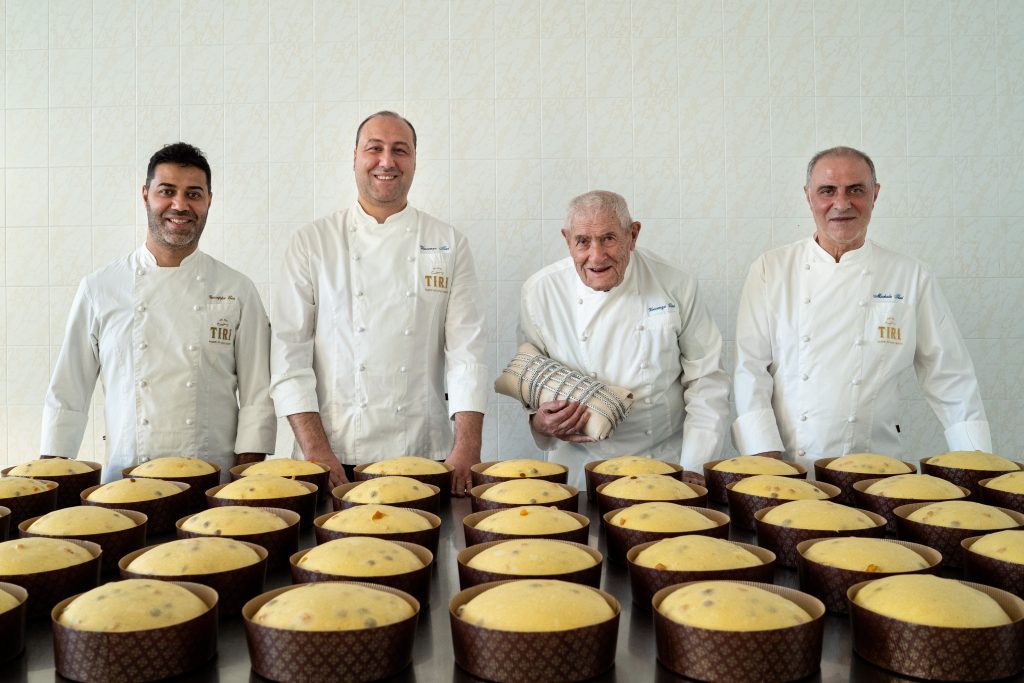
The raw materials follow the same logic. There's no room for approximation. The candied fruit maintains the tension between sugar and acidity because it's processed slowly, without losing its essential oils. The apricots and pistachios come from a specific area, chosen for their role in the final balance. The vanilla is always natural, never substituted. The butter is selected for its processing characteristics, not just its flavor.
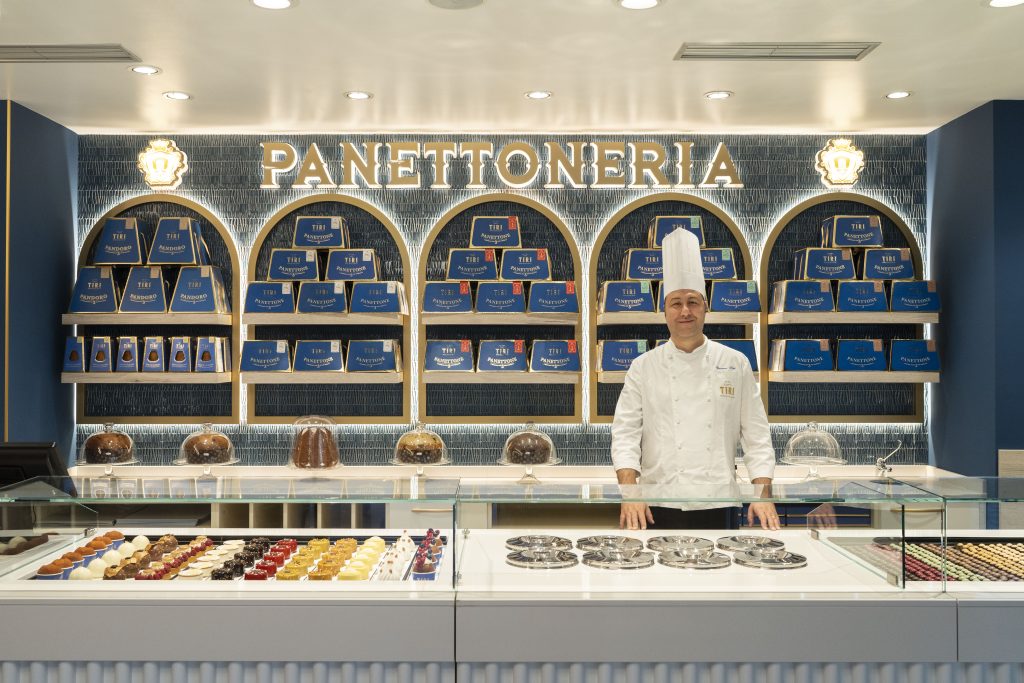
The flours are designed to withstand long processes without breaking. Everything converges in a system that finds its complete form in the bakery space. It's not just a point of sale, but a coherent extension of the laboratory. Leavened goods become a constant presence, available at any time of day, from breakfast to aperitif. Not as a forced variation, but as a demonstration that seasonality, in this case, is a cultural rather than a technical limitation.
The space follows the same line: no ostentation, but a precise construction of the experience. The design evokes a recognizable, measured aesthetic, where every element—from the colors to the packaging—contributes to defining a strong identity, without needing to be declared. Even the act of purchasing becomes part of the story. The production model is equally rigorous. One part remains anchored to the freshness of the point of sale, another develops in a more structured laboratory, capable of supporting growing demand without compromising quality. It is not a duplication, but a smart distribution of processes. At its core, an idea remains both simple and challenging: panettone as a measure. Not a dessert, but a reference system. If it holds up there, it holds up everywhere. This is what makes Tiri's work relevant: not innovation per se, but the ability to redefine a language starting from a seemingly finished form.