
CANALS, BELL TOWERS, AND GOLDEN REFLECTIONS: A JOURNEY TO THE LITTLE VENICE OF HOLLAND, BETWEEN ART, HISTORY, AND DREAMY ATMOSPHERES.
There is a city in the Netherlands It seems to hold, better than any other, the secret soul of 17th-century Dutch painting. Every corner, every sunlit window, every shadow silently lingering on the canals seems to have been lifted from a canvas. It's no coincidence that Johannes Vermeer, the painter capable of capturing light and transforming it into eternal poetry, lived and worked here. Delft It's not just a tourist stop: it's a place suspended in time, a microcosm of water and silence, of understated elegance and discreet wonder, which gives visitors the sensation of walking through an open-air museum.
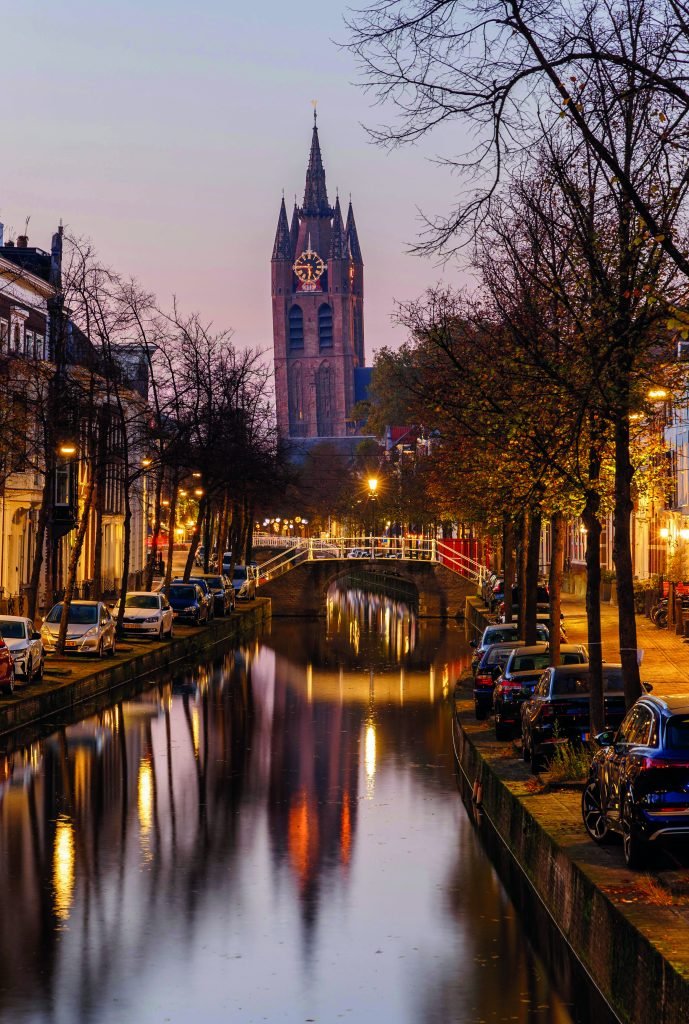
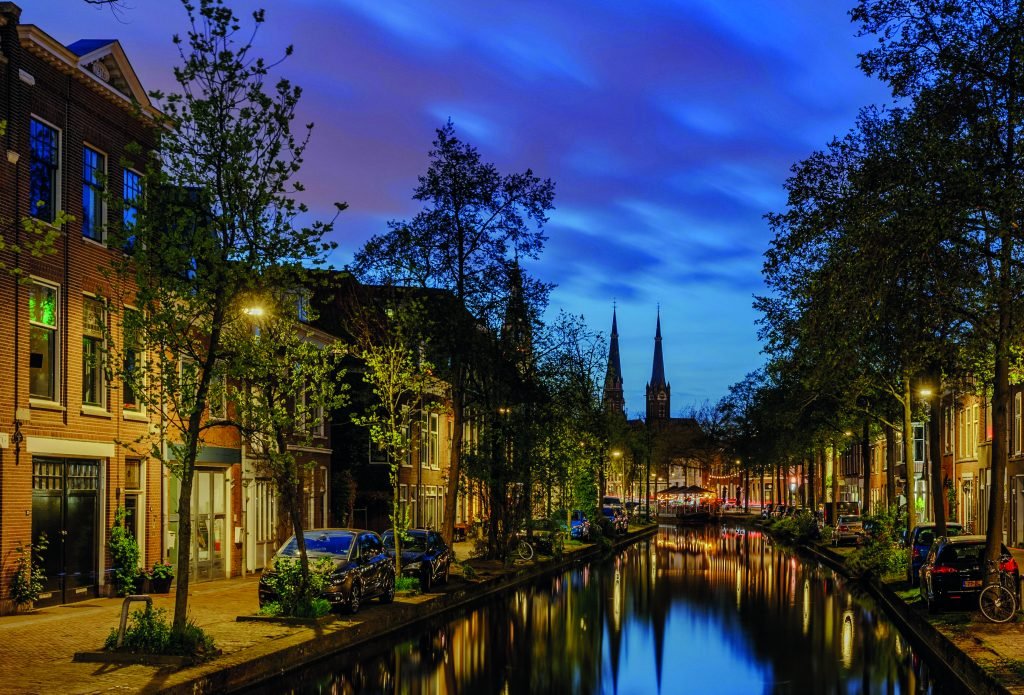
The city, nestled between The Hague and Rotterdam, is traversed like leafing through an album of old paintings. The winding canals reflect slow-moving bicycles, the pace of life is calm and measured, and the brick-colored or whitewashed facades are mirrored in the water, transforming the ordinary into the extraordinary. Delft is often called the "Little Venice" of Holland, but this definition, while evocative, is somewhat restrictive: here, you breathe not only scenic beauty, but an intimate, authentic grace that speaks directly to the heart.
In spring, cherry trees and tulips open along the avenues, bathing the city in light, joyful colors; in autumn, the golden leaves falling on the water create a melancholy, poignant atmosphere. It is during these seasons, when the chromatic contrasts become more intense or more delicate, that Delft reveals its most magical side. Small boats float on the canals, transformed into cafés or bookshops, floating refuges where you can read, drink tea, or watch the sun slowly glide over the rooftops.
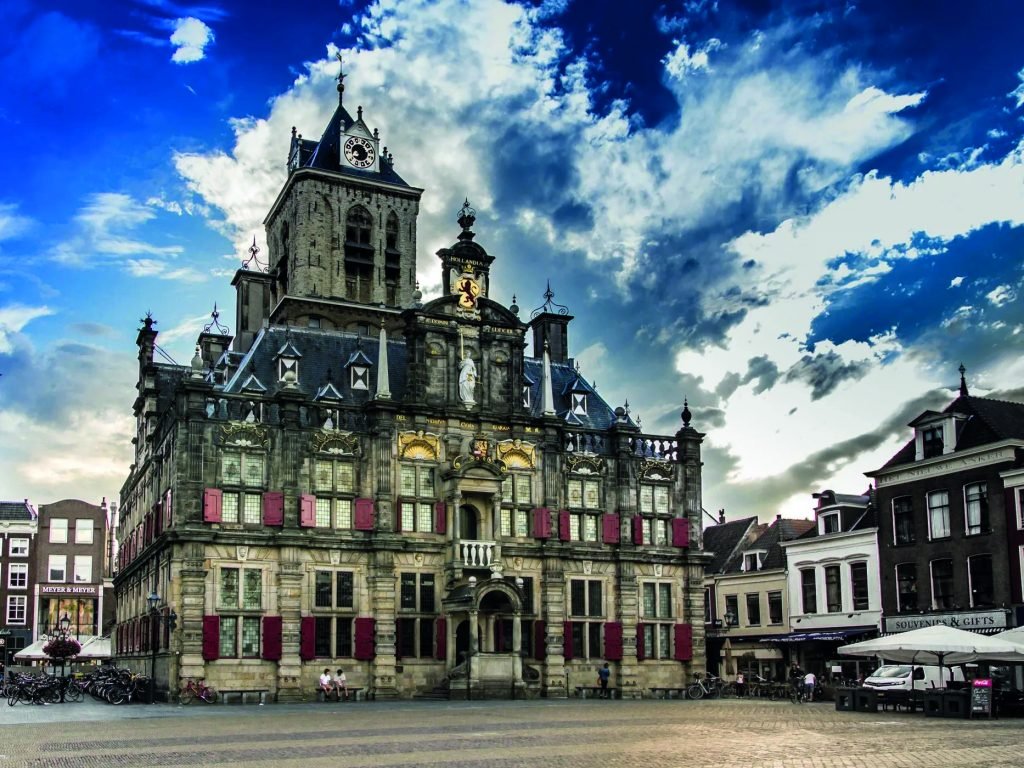
The facades of the historic houses, each one different from the next, tell stories of merchants, ceramists, and artists, harking back to a time when the city was a vibrant hub for art and majolica manufacturing.
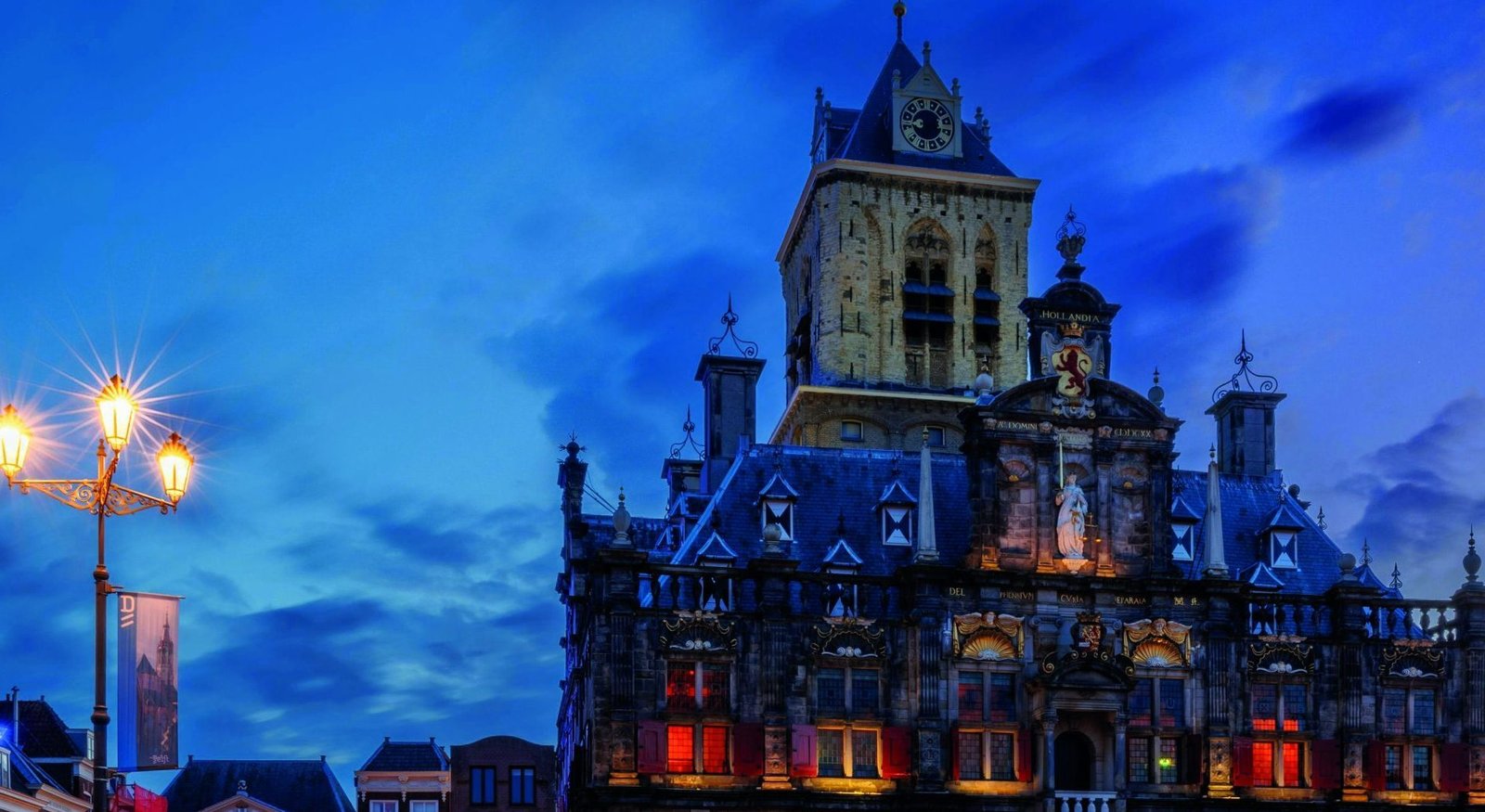
In the centre, like lighthouses that guide the gaze, stand the two large churches: the New Church, the New Church, with its very tall, slightly inclined bell tower, reminiscent of that of Pisa, and dominating the city like a needle piercing the sky. Opposite, almost creating a dialogue of stone and time, is the Old Church, the Old Church, where Vermeer himself is buried. Its dark and solemn Gothic tower is reflected in the water like an ink stroke traced by an invisible hand.
Here the silence has a particular tone: the sounds are muffled, the footsteps seem blurred, and the light, filtered by a golden patina, evokes the same intimate atmosphere that Vermeer was able to imprint on his canvases.
Among the stages not to be missed there is undoubtedly the Vermeer Centrum. It doesn't house original paintings, but it recounts the artist's world with infectious passion. It's a place where you can discover his technique, his deep connection to Delft, and above all his extraordinary ability to immortalize what was once merely an everyday gesture: a woman pouring milk, a girl reading a letter, a ray of sunlight shining through a window. A few steps away, the painter's birthplace, now marked and open to visitors, reveals the most intimate and fragile aspect of a man who, in his time, lived almost unnoticed, but who is now celebrated worldwide as one of the absolute masters of universal painting.
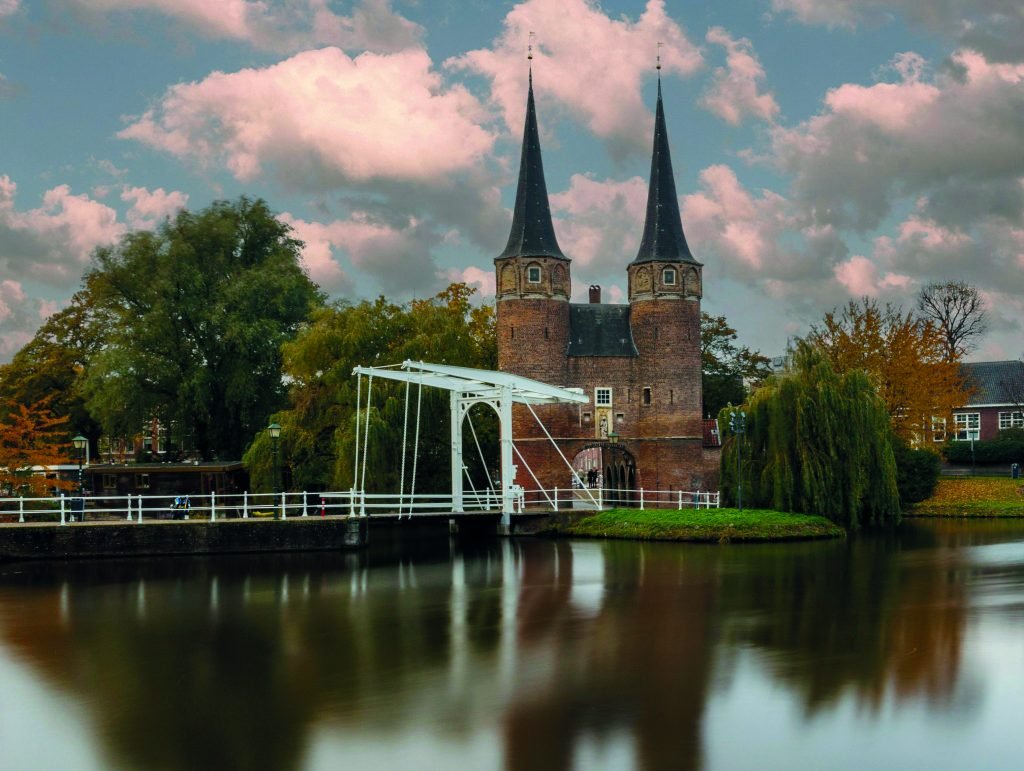
Strolling further, you come across intimate, almost secret squares, wrought-iron bridges that seem to have emerged from a 19th-century novel, flower markets that fill the air with the scent of flowers, and old mills that still turn, moved by the wind as if time had stood still. Among these, the De Roos mill stands out, the last remaining within the city walls, with its imposing blades rising between the sky and the greenery: a living monument, a discreet guardian that watches over Delft with the patience of centuries.
But Delft is more than just architecture and history: it's also a pervasive natural setting, pervading everything and softening every corner. In the shady parks, in the carefully tended urban gardens, in the secret gardens hidden behind the gates of the houses, a greenery constantly dialogues with the water of the canals. It's a city that invites you to experience it slowly, on foot or by bicycle, with your gaze turned upward to capture the play of the clouds and the dance of light on the surfaces. Every glimpse thus becomes a snapshot of quiet, harmony, and understated beauty. In Delft, it truly seems as if Vermeer didn't just paint his domestic interiors or the faces of his silent women, but that he also left his mark on the entire city, transforming it into a living canvas. For those seeking inspiration, inner peace, pure and unostentatious emotion, Delft is an ideal destination: a secret to be discovered, guarded, and carried away in silence, like a promise whispered among the cobbled streets and the golden reflections of its canals.
In Delft, every reflection on the water is a brushstroke of light that transforms the ordinary into the eternal.