
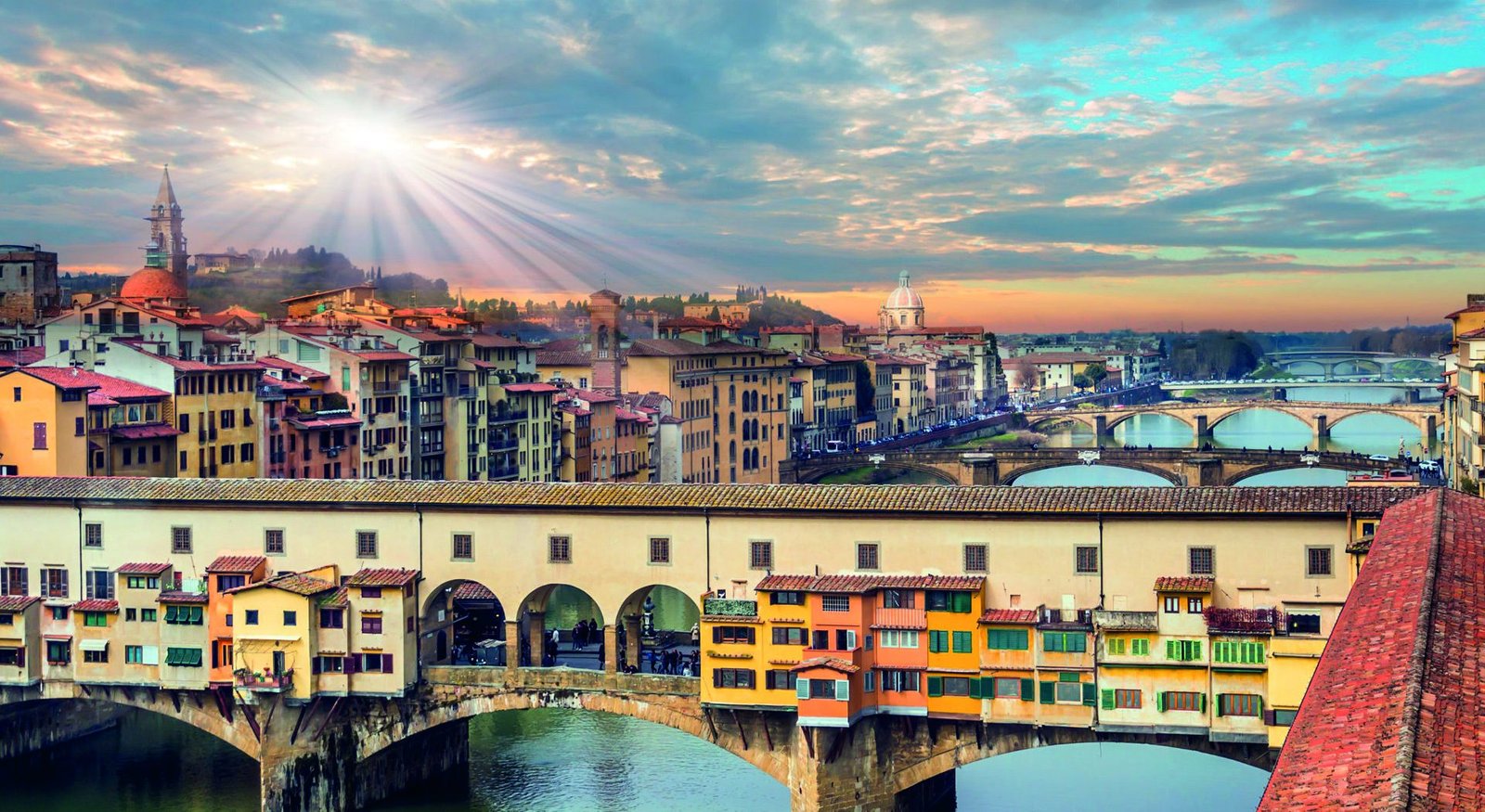
THE GOLD WORKSHOPS, THE VASARI CORRIDOR, AND THE SECRET SOUL OF FLORENCE WHERE TIME SEEMS TO HAVE STOPPED, SUSPENDED BETWEEN WATER REFLECTIONS AND GOLDEN GLOW.
Old Bridge It is the most famous of the bridges over the Arno, an absolute icon of beauty and memory. It is not simply a crossing, but a sensorial and cultural experience that envelops everyone who passes by, a living story that spans the centuries and is renewed at every step, without ever losing its essence.
Built in its current form in 1345, the bridge replaced previous structures destroyed by the river's floods, marking a new chapter in the city's history. From its origins, its purpose was to accommodate shops: small spaces directly overlooking the water, suspended on wooden consoles, like urban nests reaching out to infinity. Butchers, tanners, and food vendors initially settled here, creating a vibrant microcosm of sounds, smells, and everyday gestures, a true reflection of medieval Florence. It wasn't just commerce: it was relationships, it was identity. The Florentine merchant didn't just sell, he built trust, forged relationships, and became a point of reference. The shops were open, exposed, almost theatrical: the counter facing the street, the merchandise visible, the dialogue continuous. People bargained, they observed, they returned. Florence, even then, was a city where commerce was culture, and the act of selling had something profoundly human. However, it was in 1565 that the bridge changed its face and destiny, when Giorgio Vasari, on behalf of Cosimo I de' Medici, designed the famous Vasari Corridor.
This elevated passage, about a kilometer long, connected Old Palace with Pitti Palace, allowing the Medici family to safely cross the city, suspended above public life. A discreet, almost invisible route, it combined power and vision, strategy and sophistication, transforming the bridge into a central element of an urban system as functional as it was symbolic.
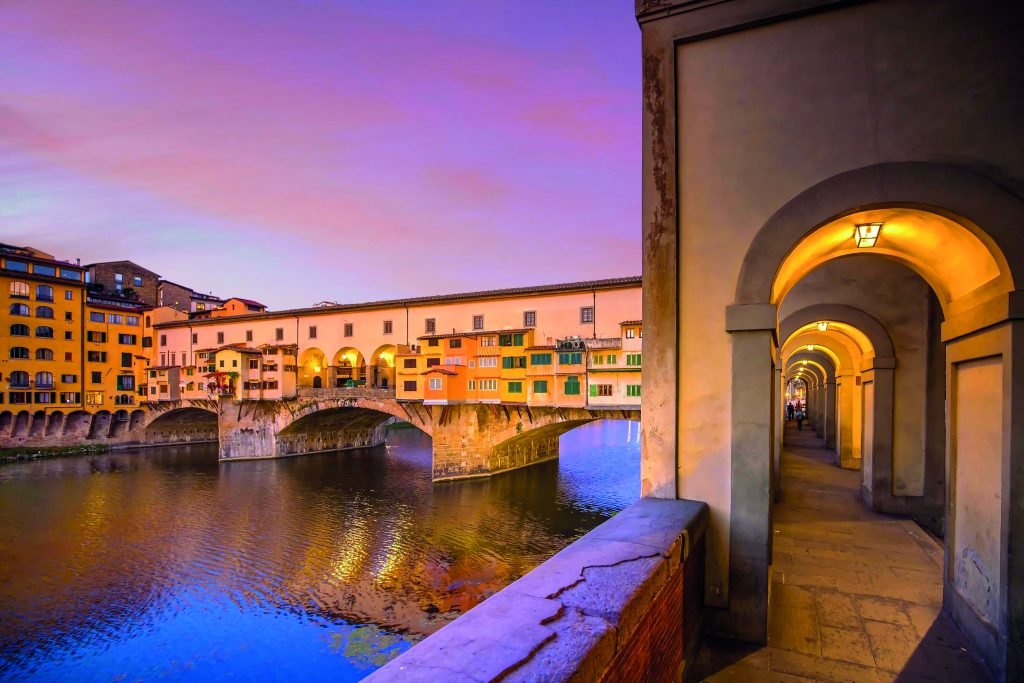

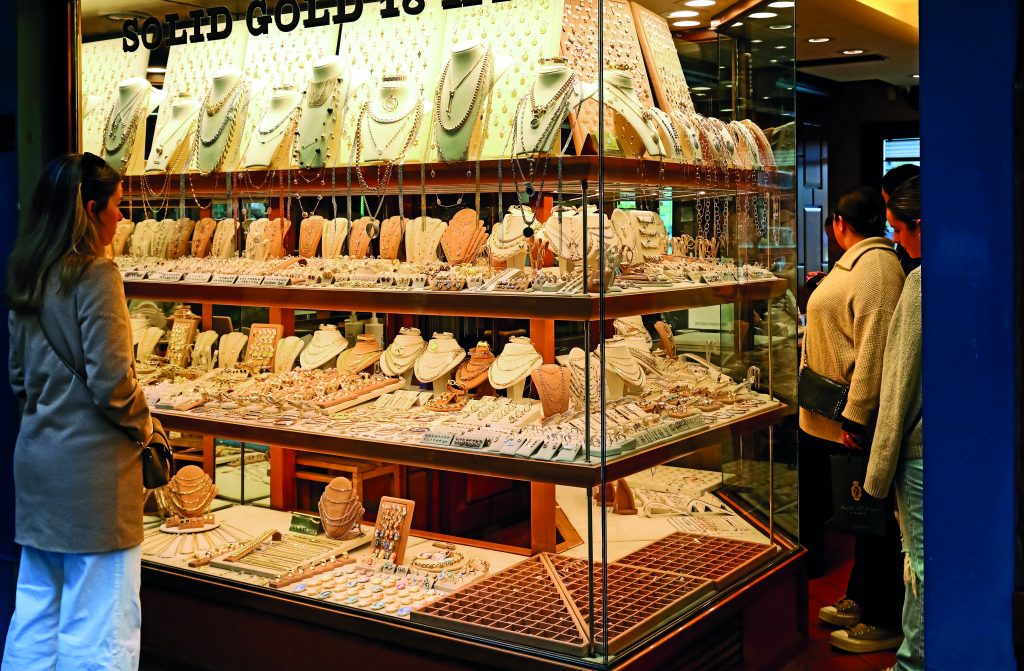
It is said that the Medici family, tired of the odors and mess created by the food industry, decided to remove the butchers and tanners, replacing them with goldsmiths and jewelers. It wasn't just an aesthetic choice, but a political one: to elevate the bridge to a place of representation, transforming it into a showcase of excellence.
From that moment on, gold replaced flesh, the light of the precious material replaced the noise of the harshest everyday life. And the bridge shed its skin, without losing its soul. Even today, a trace of that ancient commercial spirit survives in the so-called "buchette": small openings that allowed shopkeepers to close and protect their goods, but also to continue selling safely. During difficult times, including plagues, these openings became instruments of controlled exchange, anticipating forms of adaptive commerce that we would now call modern.
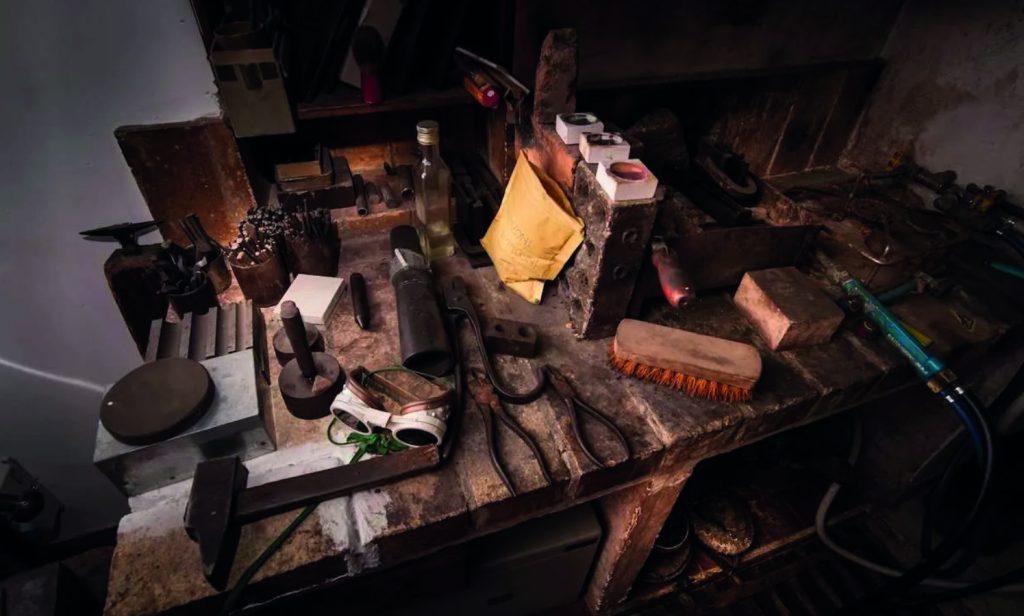
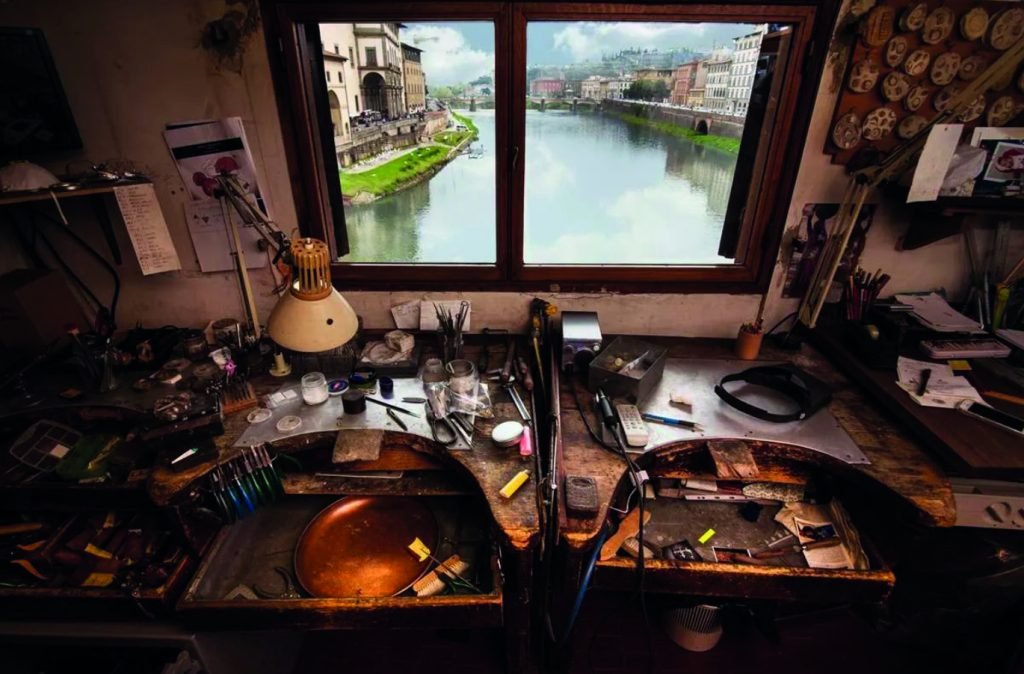
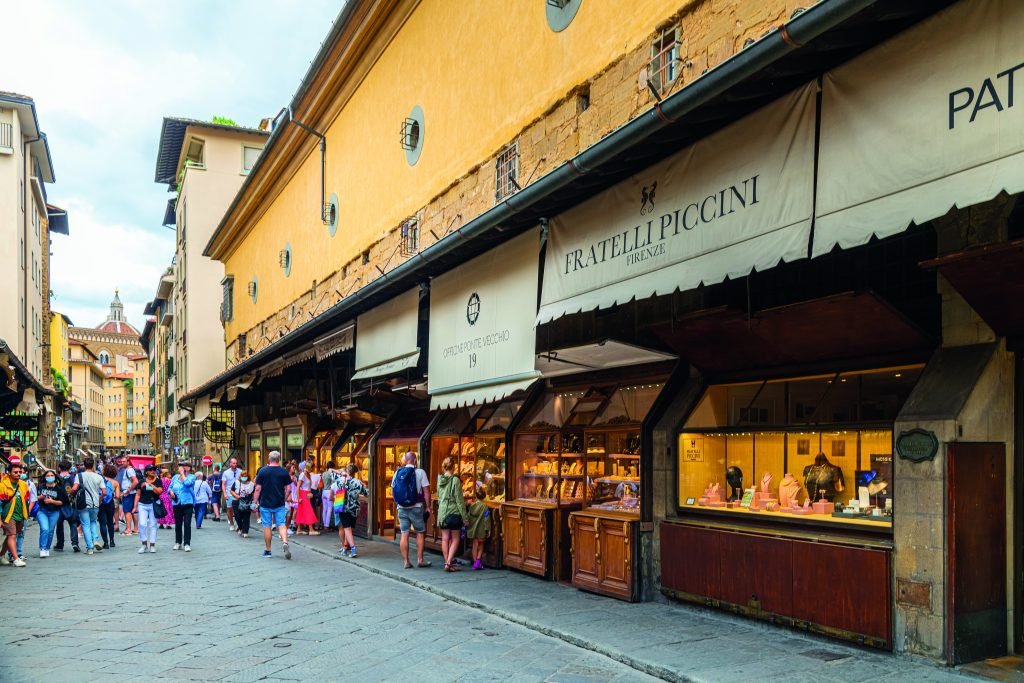
Today, these historic workshops maintain their charm without betraying their soul. Alongside artisans who preserve centuries-old techniques, they house some of the most iconic international jewelry and watchmaking houses, such as Rolex, Vacheron Constantin, TAG Heuer, Hublot, Audemars Piguet and Patek Philippe. Names that embody excellence and prestige, perfectly placed in this unique context, where every window becomes a narrative of light, material, and time.
Walking across the bridge means immersing yourself in a dimension suspended between history and enchantment. The voices of visitors mingle with the slow sound of the water, while your gaze wanders among the medieval architecture and the golden reflections of the shops. At the center, the space opens onto a small panoramic terrace: from here, Florence reveals itself in all its harmony, amidst domes, towers, and hills fading toward the horizon, in a perfect balance between nature and architecture. And then there's that detail invisible to most: above the heads of passersby, silent and discreet, runs the Vasari Corridor, guardian of stories, works of art, and court secrets. A thin thread that ties together different worlds—the public one.
and the private one — in a continuous dialogue between above and below, between what is shown and what remains hidden.
The Ponte Vecchio is also a symbol of resilience. During World War II, it was the only bridge in Florence not to be destroyed, spared—it is said—for its extraordinary beauty. This gesture has preserved it intact for the modern age, making it not just a monument, but a living testimony, capable of standing the test of time without breaking.
Today, its workshops exude a timeless elegance. It's a place where artisan tradition meets international luxury, where ancient craftsmanship meets contemporary design, and where every detail contributes to a unique experience, filled with light, silence, and wonder.