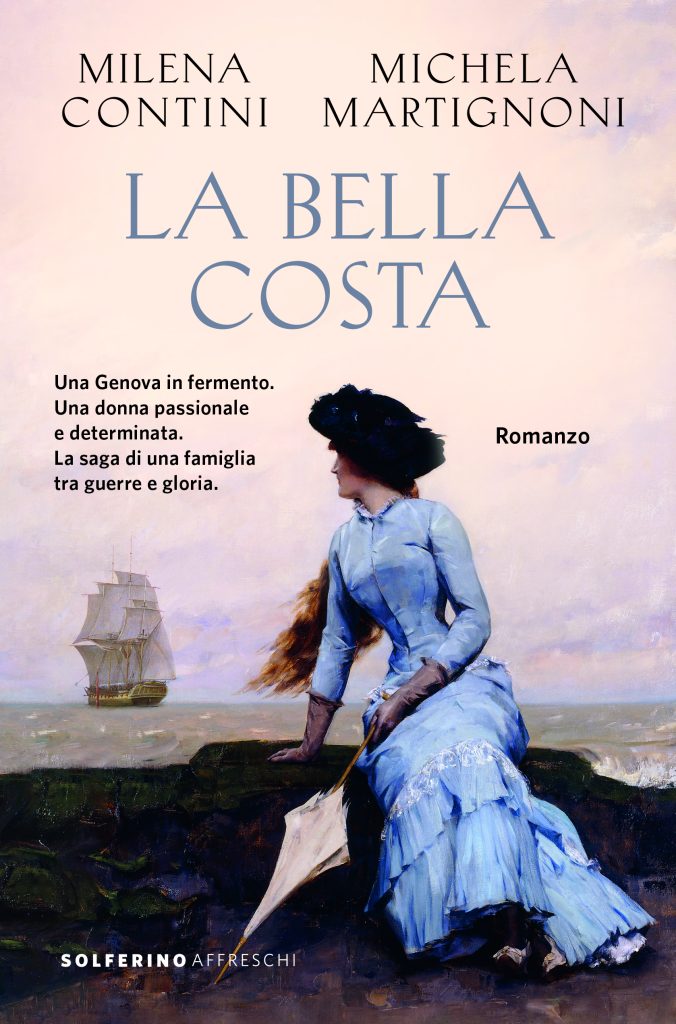

THE REBEL OF GENOA: GENOA, THE LAST DECADE OF THE 18TH CENTURY. ANTONIETTA, SIXTEEN YEARS OLD, REFUSES TO MARRY THE SUITANT HER PARENTS SELECTED FOR HER. SHE WANTS TO CHOOSE HER OWN DESTINY. THEY ATTEMPT TO BEND HER WILL WITH PSYCHOLOGICAL AND PHYSICAL TORTURE, BUT THE GIRL WILL NOT LET HERSELF BE BROUGHT, GAINED A FREEDOM THAT WILL BE THE IGNITION FOR THE ADVENTURES OF HER LONG AND INTENSE EXISTENCE.
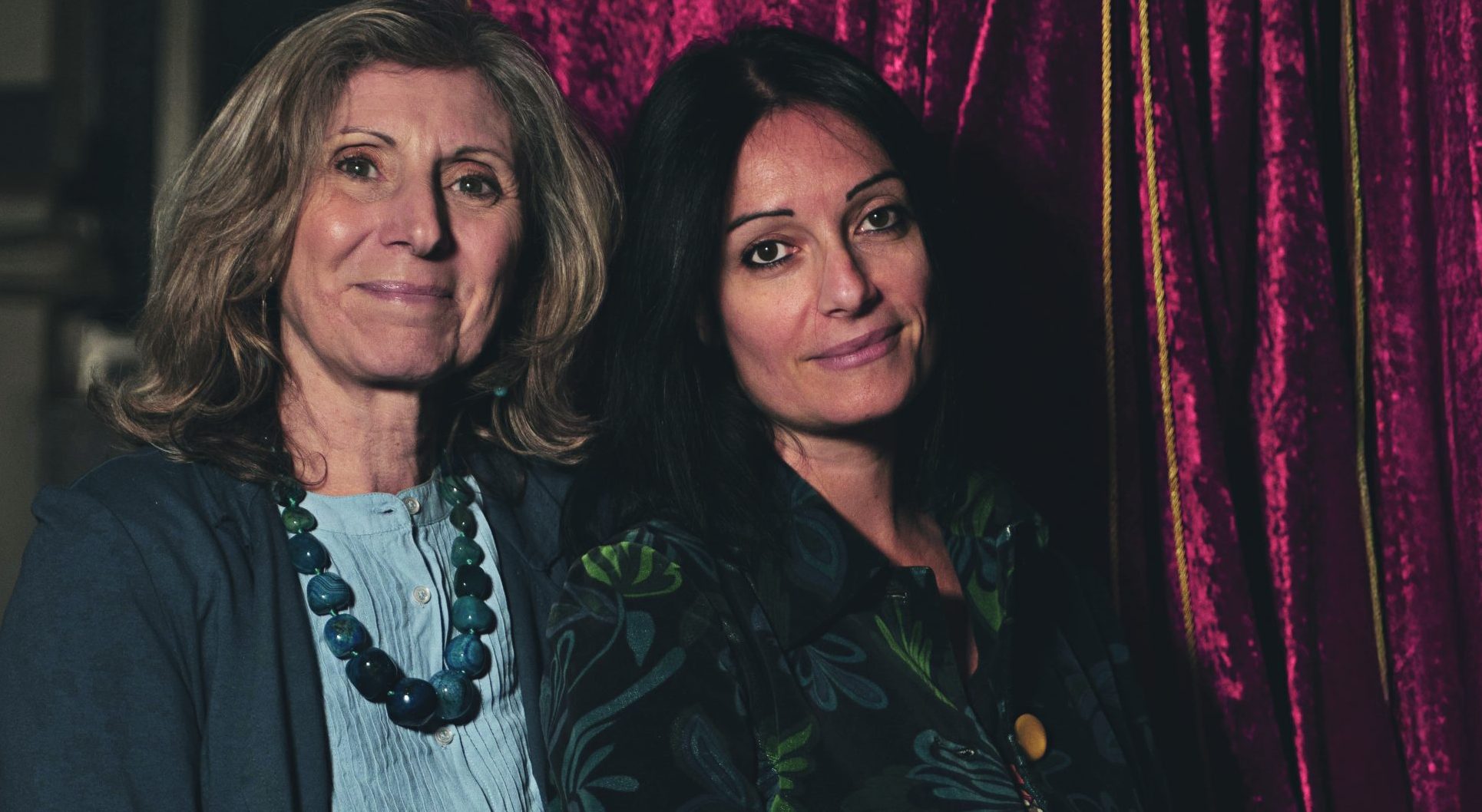
Antonietta is an original, strong-willed, unconventional woman. Fragile and tenacious at the same time. Capable of running toward the future without looking back, without ever lowering her gaze, without ceasing to dream of happiness, even in the most tragic moments. A novel full of love, intrigue, twists, wars, mysteries, shipwrecks, and passions. We asked the two authors, Milena Contini and Michela Martignoni, a few questions.
Is the protagonist of your novel based on a real person? Of course! Sixteen-year-old Antonietta Galera rebelled against an arranged marriage to the attractive and wealthy Chevalier Verney to marry Marquis Giacomo Pasquale Costa, a fifty-eight-year-old Senator of the Republic of Genoa. It was an unusual union, between a sixteen-year-old girl and a man who could easily have been her grandfather, but the relationship between the two was solid and very passionate. Antonietta managed to avoid marrying the French nobleman through a typical Genoese custom: the chalice notes. Anyone could anonymously report abuse and crimes by placing messages in containers placed outside the seat of the Doge of the Republic. The Doge protected and supported Antonietta, who even had the courage to sue her parents to recover her huge dowry. All this is documented: we've added the spice, to make the story even more intriguing and compelling.
Antonietta's story is very adventurous and intersects with those of other interesting characters: can you tell us anything about it? With pleasure: Antonietta's novelistic journey is rich in events and experiences that will lead her to frequent some of the leading figures in the politics and culture of the time (just to give a few examples: Giuseppina Beauharnais, Jean Victor Moreau, Andrea Massena, Luigia Pallavicini, Ugo Foscolo, Vincenzo Monti, Giuseppe Mazzini...) and to intertwine her existence with very interesting characters, such as the faithful servant Gabrio, the psychopathic torturer Adele, the castrato singer Alfonso, the courtesan Manila, the pirate Sebastiano, the lesbian midwife Rosalba, the cicisbeo Ippolito, the gangsters of the alleys, the life-sentenced Camilla, the perverse clients of "La Lingua", the witches of Valbrevenna, the Flemish criminal Sofonisba Van der Goten.
In your novel, you tell a very powerful and little-known historical story: the siege of Genoa in 1800. Can you give us some details? It lasted less than two months (from mid-April to early June), but it was a terrible time for the city: famine, epidemics, violence, bombings, looting. Over 20,000 civilians died. In La Bella Costa, we recount its most tragic aspects: rats sold at the market (at a high price!), suspected cases of cannibalism, suicides, overflowing mass graves, attempted escapes by sea, gravediggers killed by the fumes of corpses in churches, pets cooked in the square, poisonings caused by the ingestion of poisonous plants or toxic ingredients (someone started selling fritters made with lime instead of flour), thefts, rapes, abuses, hospitals in disarray… But we also describe the heroic exploits of a population that, though devastated by hardship, did not give up and supported French General André Masséna (in our opinion one of the novel's most interesting characters) until the very end. Antonietta played an important role during this time (managing the organization of assistance and the procurement of medical supplies). She was also contacted by Austrian spies (who attempted, unsuccessfully, to bribe her) and suffered hunger, abuse, and violence, from which she emerged stronger than before.
Stories based on family sagas are very popular these days: why did you decide to dedicate one to the Costas? It's a very ancient family that has been little talked about, at least in literature. We describe a lineage with its foundations carved in the past and its gaze fixed on the future. Antonietta is very proud to be part of it. As a young bride, she was amazed to feel "Costa to the core!" after only twenty days of marriage, while as an older woman, she offered precious advice to Giacomo Costa: "Can you smell that scent? The bark of ancient olive trees warmed by the sun. Their roots teach us to remain connected to our land. It's right to invest in maritime trade, but without forgetting the extraordinary potential of this corner of the world kissed by spring.". Are the short passages in italics in the novel linked to this representation of the 'Costa path' over the centuries? Yes, some passages in italics are intended to project the Costa family into the past and the future: for example, into the sixteenth century, plagued by witch hunts, or into the twentieth century, during the violent Allied bombing of Genoa on February 9, 1941. Or imagine that a descendant of Antonietta, Angiola, in the second half of the nineteenth century reads the shocking account of Charles Henri Sanson, the executioner who executed Robespierre in front of a roaring crowd in July 1794.
I still have many questions, but time is running out, so I'll choose one above all: why is there always a reference to the animal world in the titles? We reflected on the fact that chapter titles, rather than explaining or summarizing the content (risking robbing readers of the joy of discovering it on their own, venturing into uncharted territory), should arouse curiosity and interest. So we invented this game: each title nods to an episode in the chapter featuring an animal. It can allude to a key turning point or an irrelevant detail: the focus can narrow or broaden as the story unfolds. Readers will solve the puzzle of the title by reading the events! The chosen animals also have a strong symbolic value, capable of evoking the emotional vibrations elicited by the pages. And, staying on the subject of animals, it's worth adding that in one of the italicized inserts, a horse takes center stage...