
BORN OF ITALIAN COURAGE AND GENIUS, THE MIURA REWROTE THE RULES OF SPORTS CARS, BECOMING A LEGEND, A STATUS SYMBOL, AND AN OBJECT OF DESIRE FOR THE WORLD'S GREATEST COLLECTORS.
There are cars that become legends the moment their name is pronounced. Lamborghini Miura, introduced in 1966, belongs to this narrow and luminous category: not just a car, but a revolutionary idea, a bold gesture that redefined the very concept of a sports car. Before the Miura, grand tourers were elegant and powerful; after the Miura, the supercar as we know it today was born.
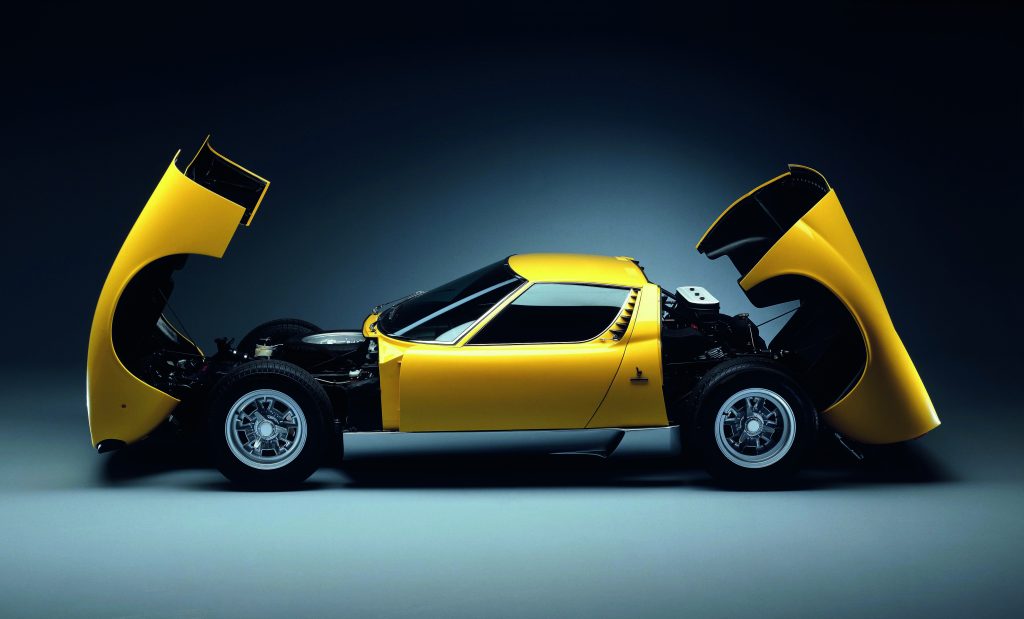
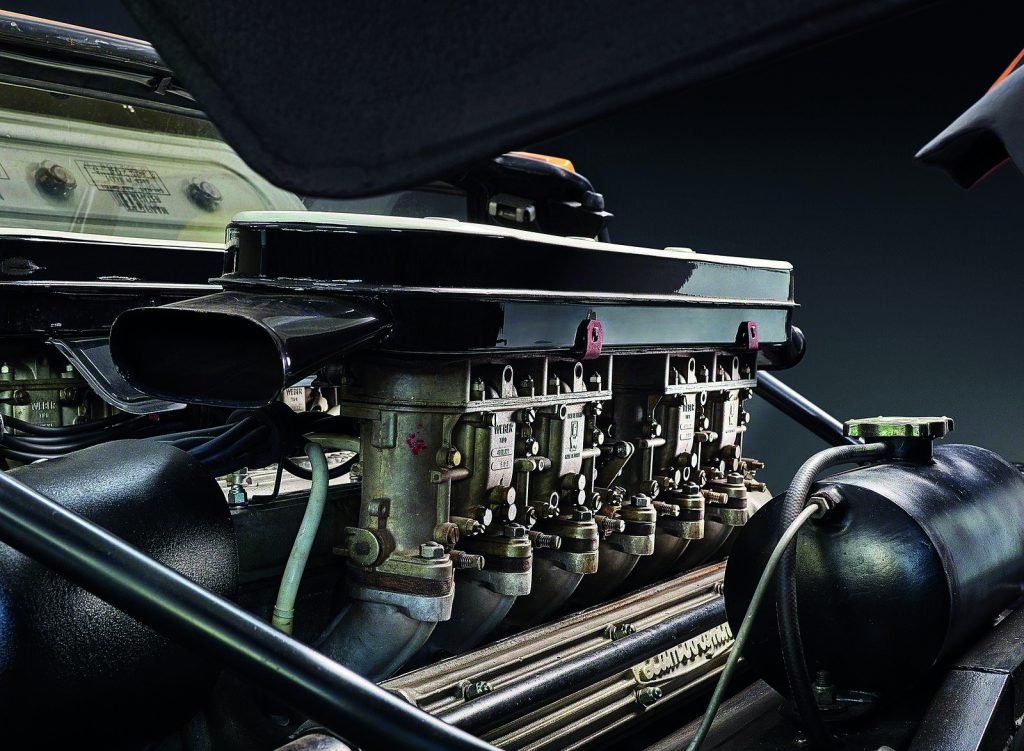
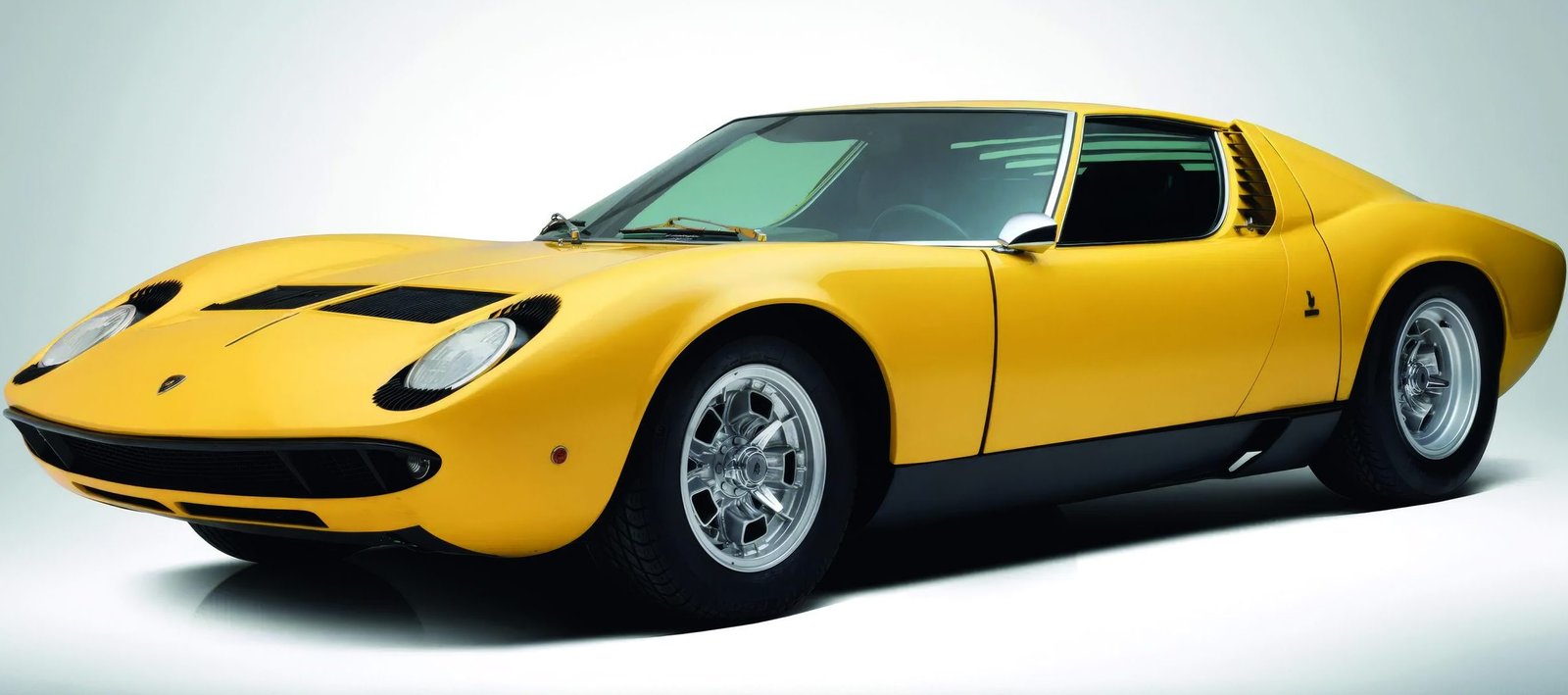
The project was born from the intuition of the young technical team of Sant'Agata, supported by the vision of Ferruccio Lamborghini, determined to challenge the giants of the sector and in particular the nearby and cumbersome Ferrari. The Miura wasn't just a response, it was a real coup. Its transversely positioned V12 engine, a solution unthinkable for a road car at the time, marked a new technical alphabet, where mechanics became not just performance but architecture. The design bore the indelible mark of Marcello Gandini For Bertone, a young talent sculpted a fluid and sensual body, combining aggressiveness and grace with unprecedented ease. The famous "lashed eyes," the sculpted flanks, the blade-like profile: every line suggested speed even when stationary. It wasn't just a car; it was a contemporary work of art with four wheels beneath the sculpture. Even then, appearing behind the wheel of a Miura meant belonging to an elite. Among its most famous owners were Frank Sinatra, who called it “the only car worthy of a man who has everything”, Miles Davis, fascinated by his rebellious personality, and Rod Stewartt, who chose it as a symbol of his life on the run. The Miura soon became a pop icon, the protagonist of cult scenes such as the opening of The Italian Job, where its golden beauty dominates the road and the screen. Today, nearly sixty years after its birth, the Miura remains one of the most sought-after and coveted cars among international collectors.
Its auction values often exceed one and a half million euros, with rare versions like the SV fetching much higher figures.
But its true value is the intangible one: being the first to change everything, to imagine a different future for sports cars, tracing the path that brands like Lamborghini, Ferrari, McLaren and Porsche they would travel in the following years.
The Miura didn't just define an era: it propelled it forward. It's a symbol of Italian audacity, of daring engineering, of seductive yet timeless design. It's an ever-present memory and a living promise: that cars can be dreams, beauty, art, power. And that sometimes, just like the Miura, they're destined to never fade.