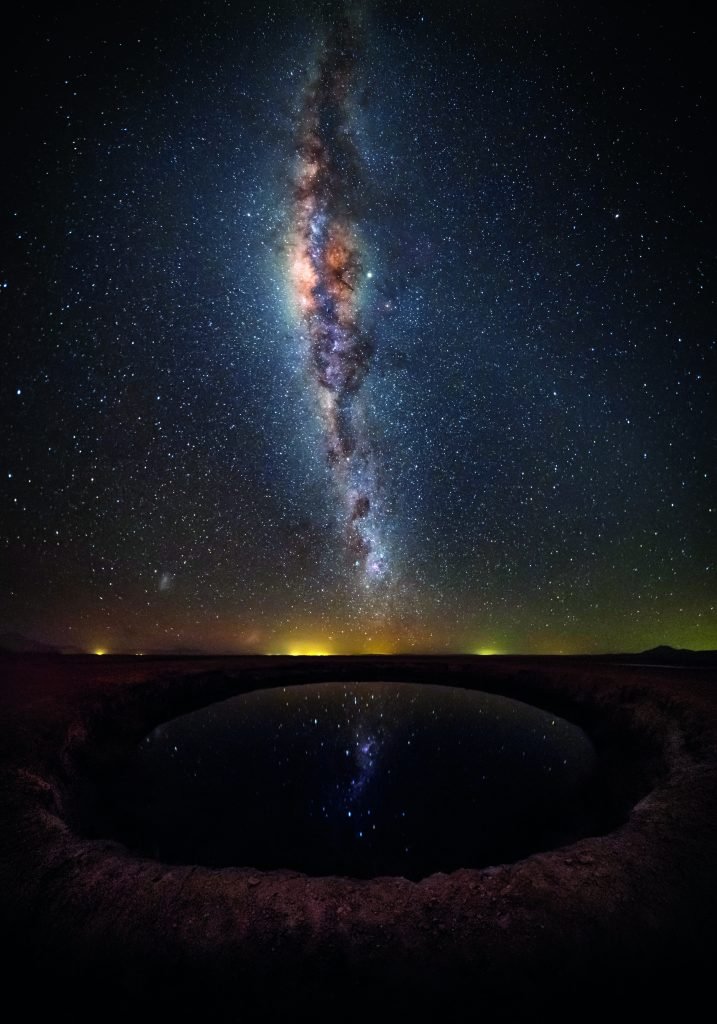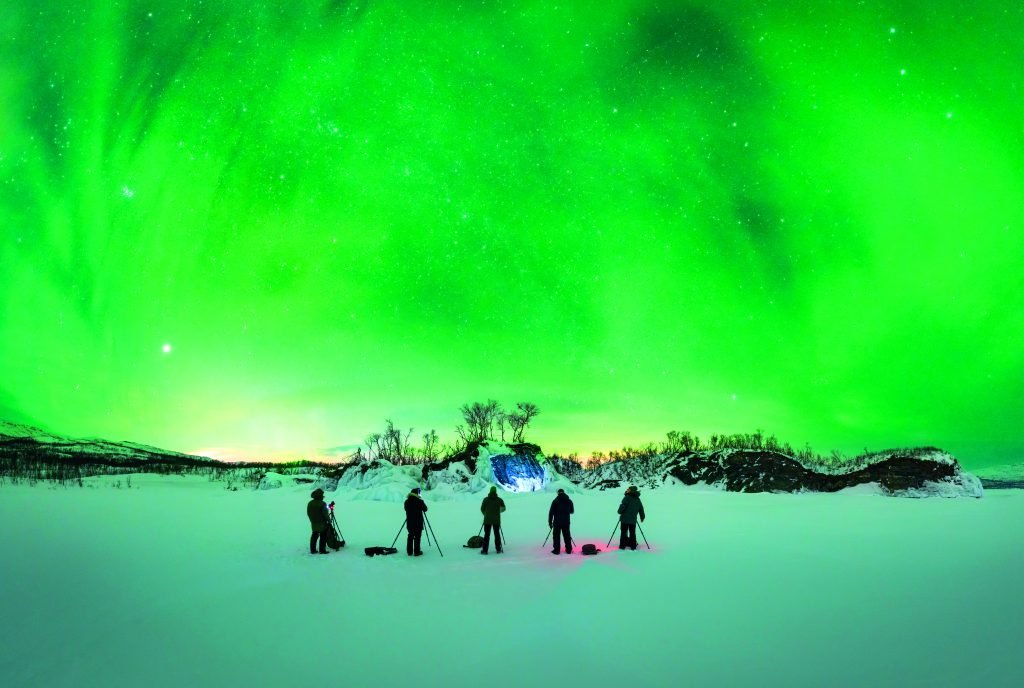
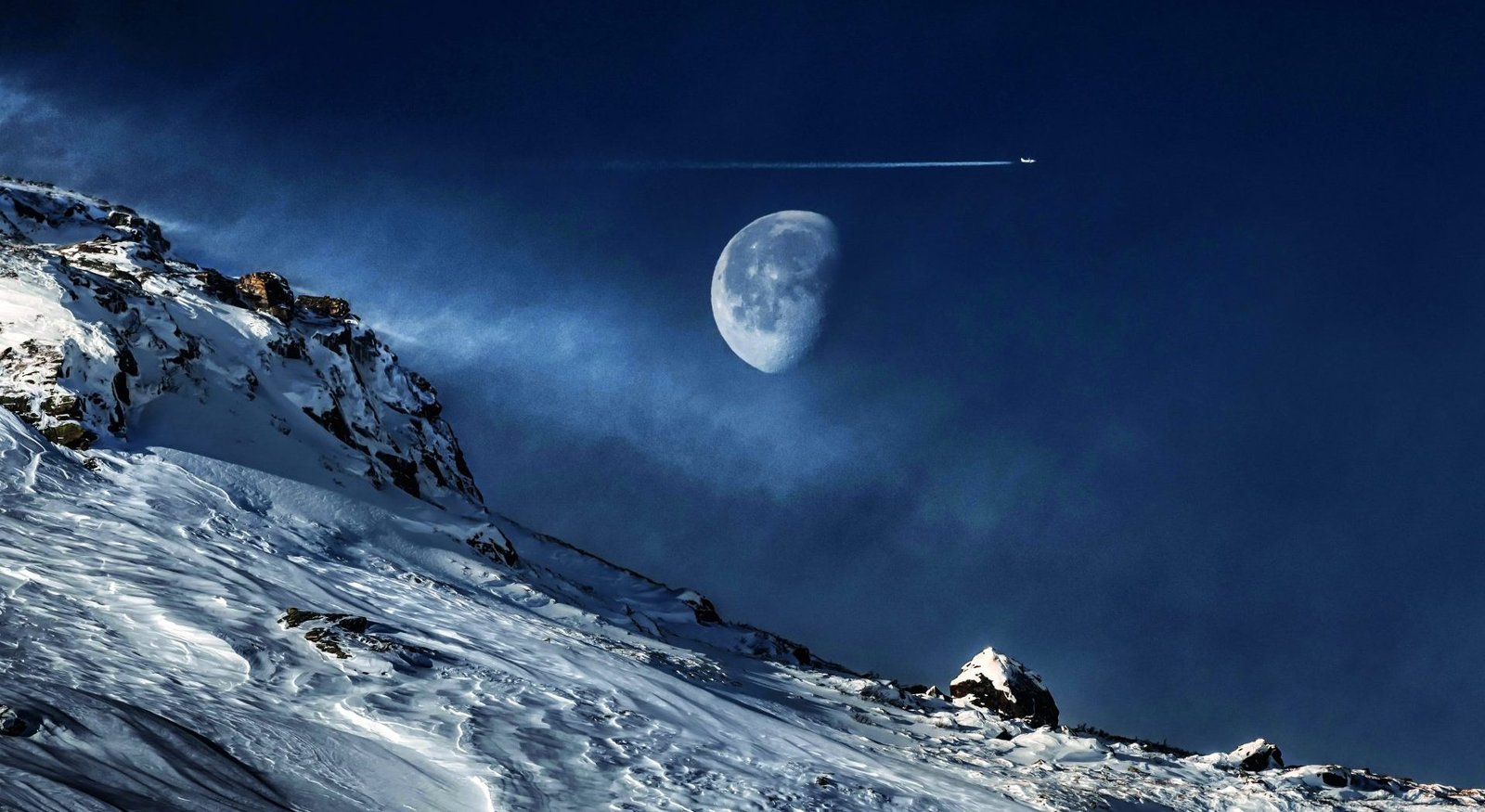
HE DOESN'T JUST CAPTURE THE SKY—HE LISTENS TO IT. GÖRAN STRAND READS THE RHYTHM OF THE STARS, THE BEAT OF THE AURORA, THE SILENCE BETWEEN ONE LIGHT AND THE NEXT. FOR HIM, THE SKY IS NOT A LANDSCAPE, BUT A CONVERSATION: BETWEEN SCIENCE AND POETRY, CURIOSITY AND WONDER, THE INFINITE AND FRAGILE PRESENCE OF MAN.
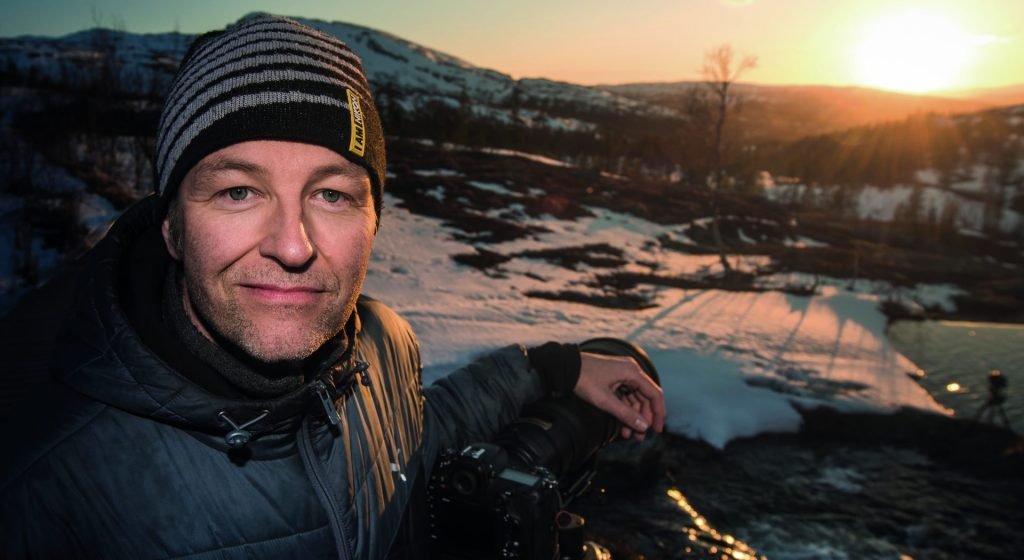
In the frozen silence of Östersund, in the heart of the Sweden northern, Göran Strand He spends his nights chasing a light most of us will never see. His stage is the sky; his collaborators are stars, clouds, and magnetic storms. For over twenty years, he has transformed the endless darkness of Scandinavian winters into a theater of color—where science meets emotion and technology translates wonder into imagery.
He defines himself as a “astronomy geek”, but Strand is much more than one of Sweden’s leading astrophotographers: he is a storyteller of cosmic perspectives.
His works capture the tension between immensity and intimacy, documenting the fragile glow of auroras, the slow rhythm of moonlight, the subtle choreography of celestial events.
His fascination with the sky began long before his first camera.“I was the kind of kid who looked up more than down.”,” he often says. That curiosity led him to physics and astronomy, but it was photography that offered him a way to translate formulas and observations into emotions—to make the invisible visible.
What began as a technical interest became art. He developed a style based on precision, patience, and a natural instinct for wonder. His compositions balance the rigor of a scientist with the sensitivity of a painter: auroras spread like brushstrokes, distant galaxies whisper over frozen lakes. “Photographing the night sky isn't just about capturing the stars,” he says. “It's a question of perspective—of how small we are, and how much we still feel part of the universe.”
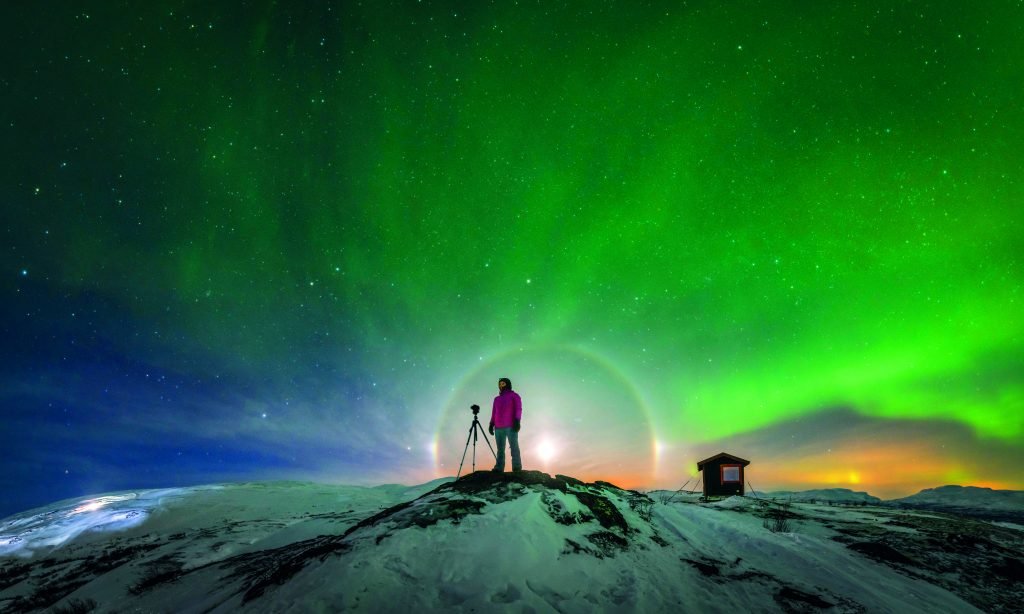
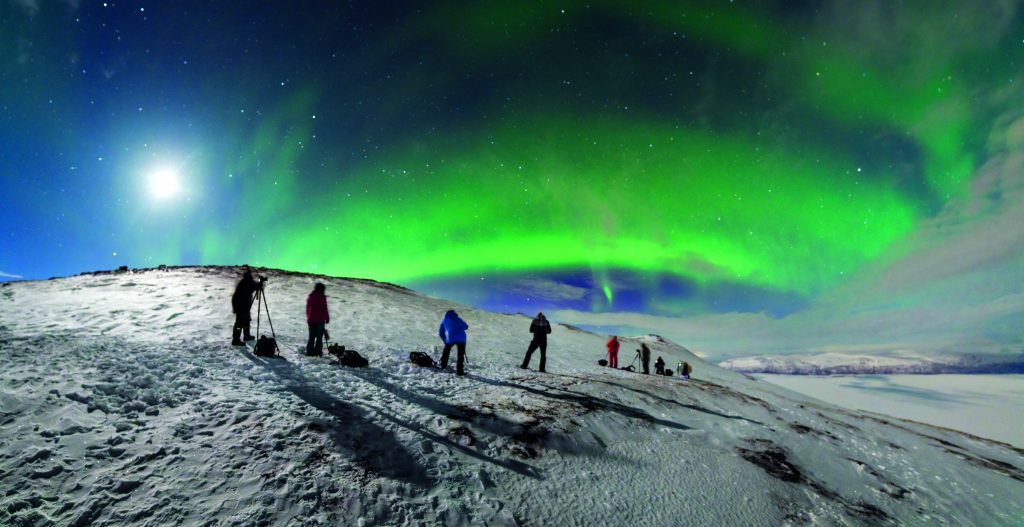
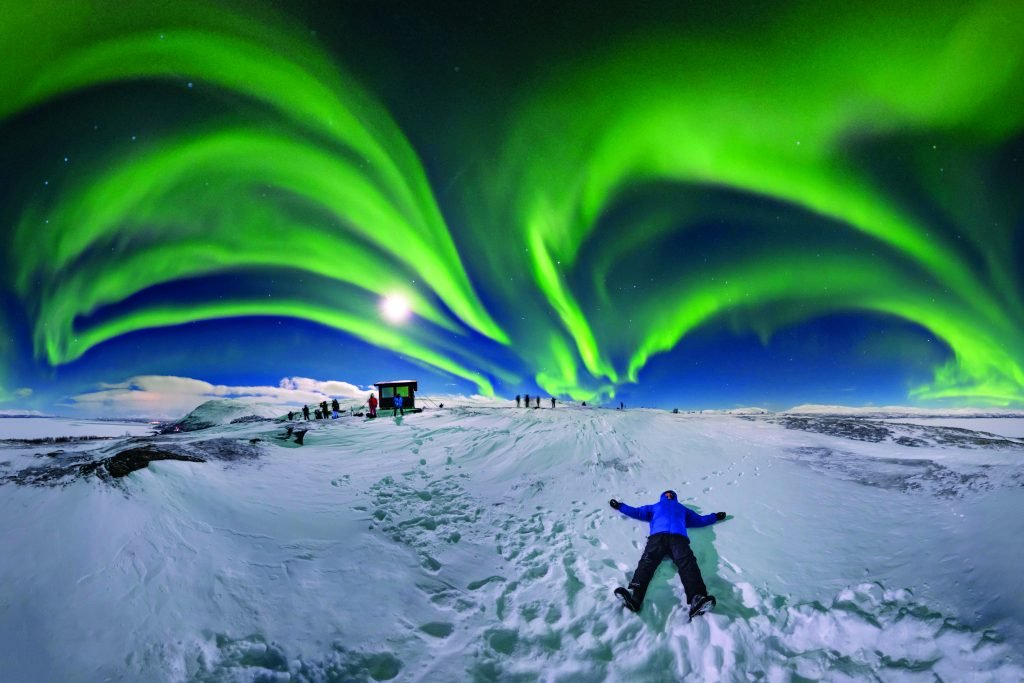
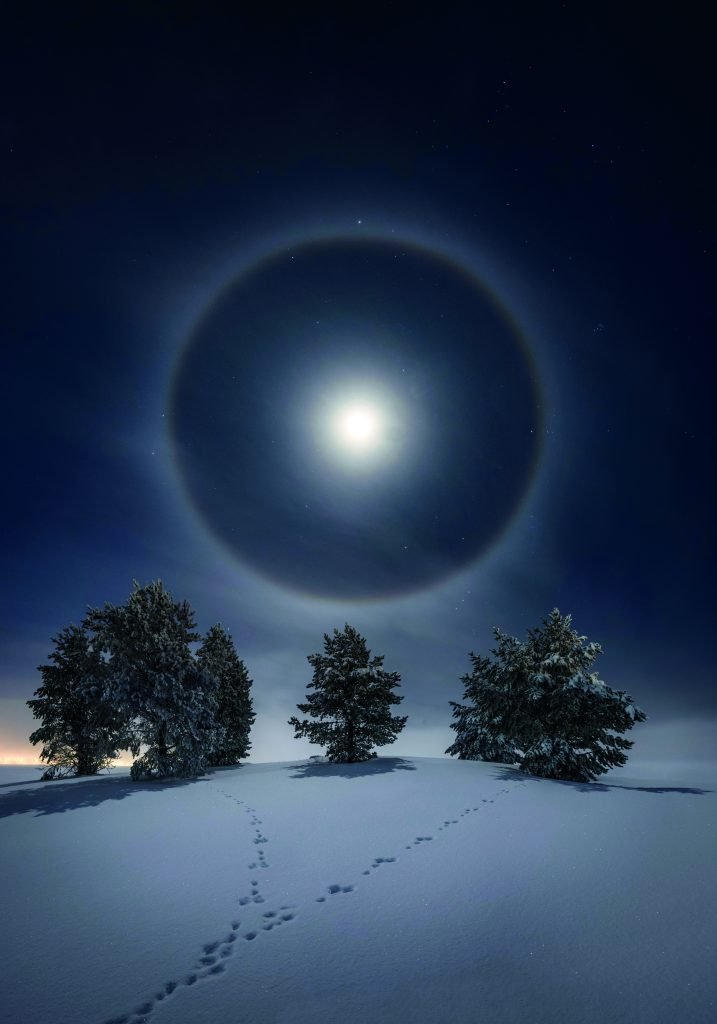
Every winter Strand ventures into the snowy landscapes around the Lake Storsjön, armed with his gear, a thermos of coffee, and an almost ritualistic patience. Temperatures can drop below -20°C, but for him, the cold is part of the experience—it sharpens concentration, suspends time. For Strand, light isn't just something to be captured, but to be studied, predicted, and respected.
He reads the sky like others read the tides—tracing the dance of the solar wind, lunar cycles, and the transparency of the atmosphere. “Auroras are alive,” he says. “They move, they breathe, they change faster than you think. The challenge is understanding their rhythm—being ready when they decide to show themselves.”
When the Northern Lights finally come on, Strand works with controlled urgency. His sensors are calibrated to the extreme, balancing the bright green and purple hues against the surrounding darkness.
The result isn't mere documentation—it's translation. His images pulsate with movement, texture, and emotion, transforming natural phenomena into immersive art.
Over the years, Strand has used everything from mirrorless systems Nikon to modified telescopes, to fisheye lenses capable of capturing entire domes of sky. Yet, despite his technical mastery, he insists that true mastery lies not in the tools, but in the discipline of observation and creativity. “The best tool you have is your patience,” he says. “No lens can replace the time you spend understanding what the light will do.” That patience—combined with scientific precision and artistic sensitivity—has brought him recognition in Sweden and abroad. His photographs and timelapse films of celestial events have been included in international film productions, and over 25 of his images have been selected by the NASA for the Astronomy Picture of the Day series, an honor reserved for the best astrophotographers in the world.
In 2014, his work reached a completely different audience when Coldplay used one of his aurora videos in their music video for A Sky Full of Stars. For Strand it was a surreal moment: “Seeing my images in something so universal reminded me how much this fascination belongs to everyone. Everywhere, everyone, look up.” And even after thousands of nights spent beneath the cosmos, Strand remains humbled by its vastness. For him, the camera is not a barrier, but a bridge—a way to connect to something infinitely greater, yet deeply personal. And when dawn finally breaks over Östersund and the stars fade into the morning light, Göran Strand packs away his equipment, knowing the spectacle will return.
Because the universe, like art, never repeats the same scene twice.